Ameba R-DIAG
Event-driven remote diagnostics, lightweight logging with precise insight
Overview
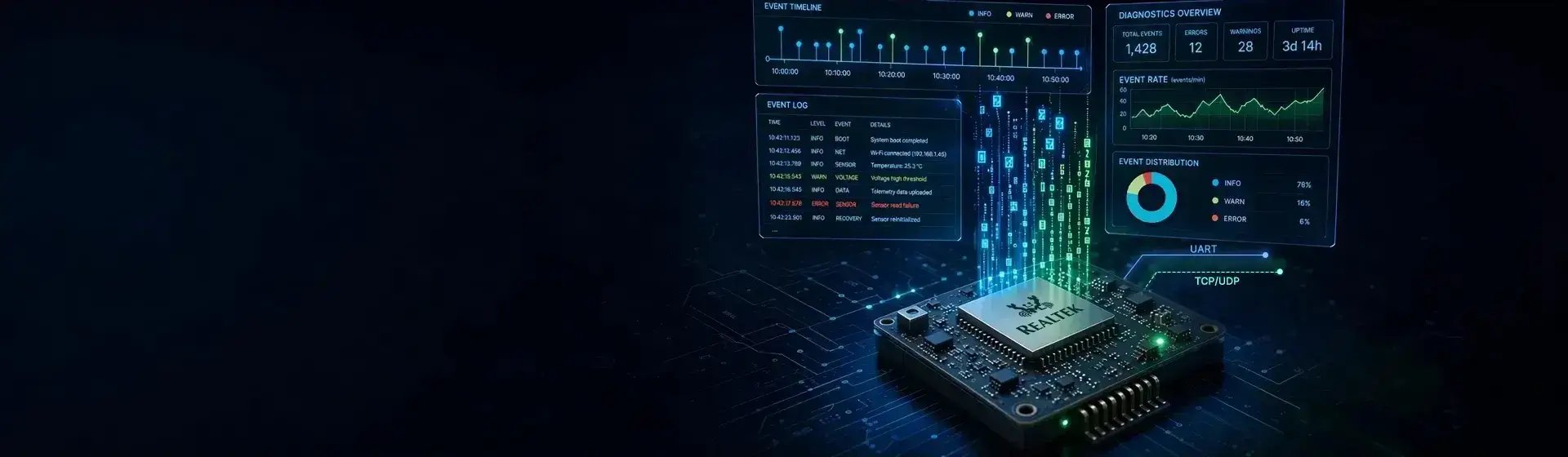
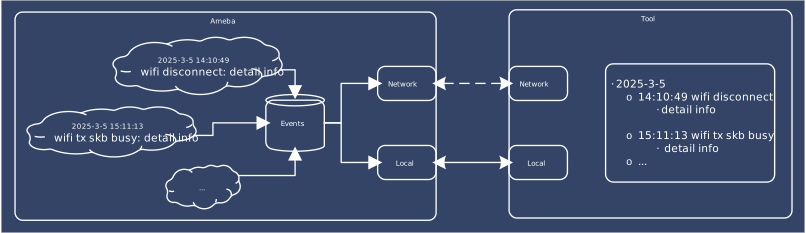
R-DIAG is an event-driven diagnostic solution for IoT devices. On the device side, event types and data structures are predefined in the SDK. Upon trigger conditions, key data is written to memory in a structured format. The host can retrieve historical events at any time via UART/TCP/UDP and accurately parse and visualize them using the JSON structure description generated during compilation.
Unlike traditional real-time printing, R-DIAG significantly reduces CPU resource usage through record-and-asynchronous-upload, ensuring critical tasks are not disturbed and providing lightweight, reliable event recording and management.
Advantages

Supports batch retrieval of historical logs and real-time subscription to new events, covering offline and online remote multi-device concurrent diagnostics

Events include type, level, timestamp, and detailed content, facilitating parsing, retrieval, and statistics

Event recording takes minimal time, with controllable impact on task scheduling, maintaining the system's original temporal behavior for easier problem reproduction

The host computer directly parses events into readable strings, making it easy to extend host capabilities: filtering, searching, aggregating statistics, charting, and other advanced functions
Typical Applications
- Custom Event Logging: Supports custom events and their trigger conditions to flexibly meet different diagnostic needs.
- Remote Device Information Retrieval: Connect to devices remotely via TCP/UDP to bulk extract diagnostic logs, reducing on-site debugging costs; can also integrate with cloud services for centralized maintenance.
- Long-Term Device Status Tracking: Suitable for long-term stable operation; logs can be collected on demand or scheduled to analyze operational status and fault trends over specific periods.
- High Real-Time Task Requirements: In timing-critical scenarios, use in-memory recording instead of real-time printing to avoid unacceptable latency.
Custom Event Logging
Supports custom events and their trigger conditions to flexibly meet different diagnostic needs.
Remote Device Information Retrieval
Connect to devices remotely via TCP/UDP to bulk extract diagnostic logs, reducing on-site debugging costs; can also integrate with cloud services for centralized maintenance.
Long-Term Device Status Tracking
Suitable for long-term stable operation; logs can be collected on demand or scheduled to analyze operational status and fault trends over specific periods.
High Real-Time Task Requirements
In timing-critical scenarios, use in-memory recording instead of real-time printing to avoid unacceptable latency.
Development Resources
| Icon | Resource Name | Link |
|---|---|---|
 |
SDK Download | Link |
 |
R-DIAG Development Guide | Link |
 |
Contact Us | Link |
Recommended ICs
| Features | Filter | RTL8720F | RTL8721F | RTL8721Dx | RTL8720E | RTL8710E | RTL8726E | RTL8713E | RTL8730E | RTL872xD | RTL8735B |
|---|---|---|---|---|---|---|---|---|---|---|---|
| Application Processor |
Cortex-M | Cortex-M | Cortex-M | Cortex-M | Cortex-M | Cortex-M | Cortex-M | Cortex-A | Cortex-M | Cortex-M | |
| DSP | N | N | N | N | N | Y | Y | N | N | N | |
| ISP | N | N | N | N | N | N | N | N | N | Y | |
| Arm TrustZone | Y | Y | Y | Y | N | Y | N | Y | Y | Y | |
| Dual Band | N | Y | Y | N | N | N | N | Y | Y | Y | |
| Wi-Fi 6 | Y | Y | N | Y | Y | Y | Y | Y | N | N | |
| R-MESH | Y | Y | Y | N | N | N | N | N | N | N | |
| Ultra-low Power | Y | Y | Y | N | N | N | N | N | Y | Y | |
| Ethernet | N | Y | N | N | N | N | N | N | N | N | |
| BT Dual Mode | N | N | N | N | N | Y | Y | Y | N | N | |
| HMI | N | Y | Y | Y | N | Y | Y | Y | N | N | |
| Audio ADC | N | N | N | N | N | Y | Y | Y | Y | Y | |
| Audio DAC | N | N | N | N | N | Y | Y | Y | Y | Y | |
| SDIO Host | N | Y | N | N | N | N | N | N | N | N | |
| SD/EMMC Host | N | Y | N | N | N | N | N | Y | Y | Y | |
| USB | N | Y | Y | N | N | N | N | Y | Y | Y | |
|
BT Dedicated Antenna |
N | N | N | N | N | N | N | Y | N | N | |
| CAN | N | Y | N | N | N | N | N | N | N | N |