All ICs
SoCs
Ameba IoT wireless solutions, featuring high integration, stable performance, low power consumption, and enhanced security
SoC Selection
Highlights
In addition to integrating essential peripheral interfaces for IoT development, Secure Boot, AES/SHA hardware encryption engine, authenticated debug access, Wi-Fi, BLE, and other important functions, this IC also supports the following features:

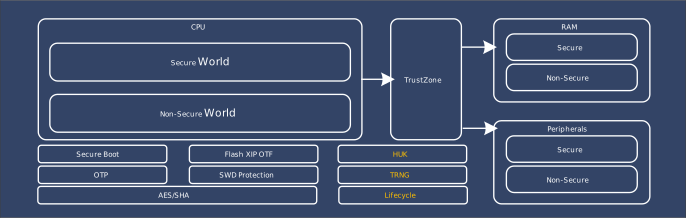
Integrates various security features including TrustZone, TRNG, HUK, OTP storage, Flash XIP decryption, etc., providing PSA Level 2 and above security protection for customer products

Supporting the 5GHz band to effectively avoid common interference sources (Bluetooth, Zigbee, microwave devices) through spectrum isolation. Leveraging abundant non-overlapping channel resources to significantly reduce co-channel interference risks, delivering high-speed, low-interference stable transmission performance.

Intelligent multi-hop multi-branch networking, significantly extending AP connection range; Underlying forwarding and control, transparent to application-layer development, eliminates traditional Mesh adaptation constraints; Rapid self-healing, ultra-low latency, ultra-high stability, comprehensively breaking traditional Mesh performance bottlenecks.

UI rendering hardware accelerator provides smooth and fast interface animations, enhancing the human-machine interaction experience of smart panels. Supports OSPI/QSPI/SPI display interfaces, flexibly adaptable from small LCDs to HD screens.

Supporting ultra-low-power WoWLAN and enabling rapid restoration of the original runtime context, empowering battery-powered devices with network listening wake-up functionality

USB 2.0 Full-Speed Device, SDIO Device
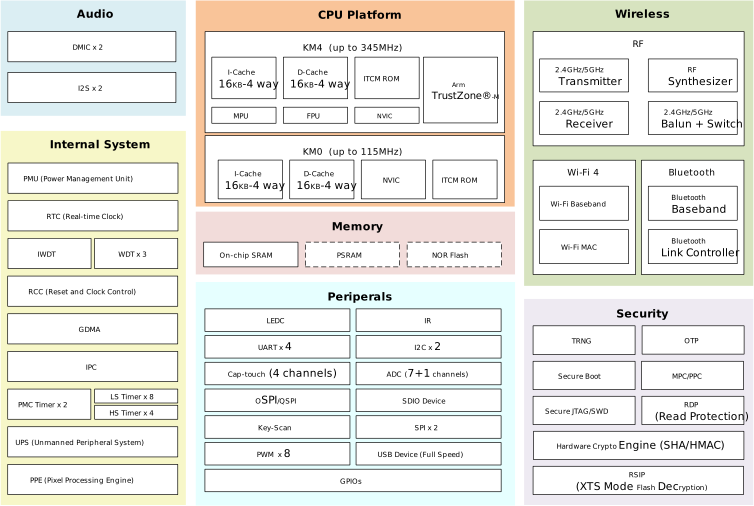
System Architecture

- Armv8.1-M Architecture
- Arm Cortex®-M55 ISA compatible
- Up to 345MHz, 3-stage pipeline
- 16KB I-Cache
- 16KB D-Cache
- FPU/DSP instruction extensions
- Arm TrustZone®-M
- Armv8-M Architecture
- Arm Cortex®-M23 ISA compatible
- Up to 115MHz, 2-stage pipeline
- 16KB I-Cache
- 16KB D-Cache

- 512KB SRAM
- QSPI NOR Flash: Up to 104MHz
- DQ8 DDR PSRAM: Up to 200MHz
Part Number
| Part number | RTL8721DAF-VA2-CG | RTL8721DAF-VT2-CG | RTL8721DAM-VA2-CG | RTL8721DCF-VA2-CG | RTL8721DCM-VA2-CG | RTL8721DCM-VA3-CG | RTL8721DGF-VW2-CG | RTL8721DGM-VW2-CG |
|---|---|---|---|---|---|---|---|---|
| Real-M300 | 345MHz | 345MHz | 345MHz | 345MHz | 345MHz | 345MHz | 345MHz | 345MHz |
| Real-M200 | 115MHz | 115MHz | 115MHz | 115MHz | 115MHz | 115MHz | 115MHz | 115MHz |
| On-chip SRAM | 512KB | 512KB | 512KB | 512KB | 512KB | 512KB | 512KB | 512KB |
| TrustZone | ||||||||
| NOR Flash | 4MB | 4MB | / | 4MB | / | / | 4MB | / |
| PSRAM | / | / | 4MB | / | 4MB | 8MB | / | 4MB |
| Wi-Fi | Wi-Fi 4 (Dual Band) | Wi-Fi 4 (Dual Band) | Wi-Fi 4 (Dual Band) | Wi-Fi 4 (Dual Band) | Wi-Fi 4 (Dual Band) | Wi-Fi 4 (Dual Band) | Wi-Fi 4 (Dual Band) | Wi-Fi 4 (Dual Band) |
| Bluetooth | LE | LE | LE | LE | LE | LE | LE | LE |
| Operating voltage | 2.97V ~ 3.63V | 2.97V ~ 3.63V | 2.97V ~ 3.63V | 2.97V ~ 3.63V | 2.97V ~ 3.63V | 2.97V ~ 3.63V | 1.71V ~ 3.63V | 1.71V ~ 3.63V |
| Operating temperature | -20°C ~ 85°C | -40°C ~ 105°C | -20°C ~ 85°C | -20°C ~ 85°C | -20°C ~ 85°C | -20°C ~ 85°C | -20°C ~ 85°C | -20°C ~ 85°C |
| Package (mm) | QFN48 (6 x 6) | QFN48 (6 x 6) | QFN48 (6 x 6) | QFN68 (8 x 8) | QFN68 (8 x 8) | QFN68 (8 x 8) | BGA100 (5.1 x 5.1) | BGA100 (5.1 x 5.1) |
Peripheral Interfaces
| FUNCTION | RTL8721DAF | RTL8721DAM | RTL8721DCF | RTL8721DCM | RTL8721DGF | RTL8721DGM |
|---|---|---|---|---|---|---|
| GPIO | 21 | 14 | 40 | 33 | 54 | 42 |
| SPI | 2 | 2 | 2 | 2 | 2 | 2 |
| UART | 4 | 4 | 4 | 4 | 4 | 4 |
| I2C | 2 | 2 | 2 | 2 | 2 | 2 |
| OSPI/QSPI | 1 | 1 | 1 | 1 | 1 | 1 |
| I2S | 2 | 2 | 2 | 2 | 2 | 2 |
| Digital microphone | 2 | 2 | 2 | 2 | 2 | 2 |
| ADC and Cap-touch | 3 | 3 | 7 | 7 | 7 | 7 |
| Infrared Transeiver | 1 | 1 | 1 | 1 | 1 | 1 |
| Key-Scan | 8 x 8 | N x (14-N) | 8 x 8 | 8 x 8 | 8 x 8 | 8 x 8 |
| SWD Interface | 1 | 1 | 1 | 1 | 1 | 1 |
| General Timer | 10 | 10 | 10 | 10 | 10 | 10 |
| Capture Timer | 1 | 1 | 1 | 1 | 1 | 1 |
| RTC | 1 | 1 | 1 | 1 | 1 | 1 |
| NeoPixel LED | 1 | 1 | 1 | 1 | 1 | 1 |
| PWM | 8 | 8 | 8 | 8 | 8 | 8 |
| USB | 1 | 1 | 1 | 1 | 1 | 1 |
| SDIO_DEVICE | 1 | 1 | 1 | 1 | 1 | 1 |
| IWDG | 1 | 1 | 1 | 1 | 1 | 1 |
| System WDG | 3 | 3 | 3 | 3 | 3 | 3 |
| GDMA | 8 | 8 | 8 | 8 | 8 | 8 |
Security Features
We consistently prioritize security as the core of our products, offering our customers a rich array of security features through hardware design and providing exceptional hardware-based attack resistance, helping to create IoT products with ultimate security.
| Features | RTL872xD | RTL8721Dx | RTL8721F | RTL8720E | RTL8710E | RTL8726E | RTL8713E | RTL8730E | RTL8735B | Comment |
|---|---|---|---|---|---|---|---|---|---|---|
| Symmetric Encryption Engine | ||||||||||
| Asymmetric Encryption Engine | / | / | ||||||||
| Secure Boot | ||||||||||
| Flash OTF Decryption | ||||||||||
| Arm TrustZone®-M | / | / | ||||||||
| EFUSE Secure Storage | ||||||||||
| True Random Number Generator | / | |||||||||
| HUK Derivation Mechanism | / | |||||||||
| Authenticated Debug Access |
Provide a laboratory evaluation of the PSA Root of Trust (PSA-RoT) to demonstrate its resilience against scalable software attacks.
Based on asymmetric encryption and digital signature mechanisms, it verifies public key hashes and firmware signatures. This process can prevent tampering and rollback attacks, ensuring that the device only runs trusted firmware
Supports both embedded and external Flash, with independent key encryption for multiple firmware. When the CPU executes encrypted firmware, it is decrypted in real-time by hardware, with nearly imperceptible performance impact. Supports unique encryption for each device, preventing injection and cloning attacks
Based on the Arm TrustZone® architecture, coupled with a dedicated hardware access control unit, it achieves strong isolation protection for secure memory areas and secure peripherals. Meanwhile, secure firmware is decrypted by the security encryption engine and loaded into the secure RAM area, ensuring protection against leakage and tampering throughout the entire process
Physical-level anti-extraction, key area locked for access only by the security engine, tamper-resistant and read-proof. Supports independent secure zones and CRC verification
Generates high-security random numbers based on physical entropy sources. Certified by NIST for randomness. Provides unpredictability to the system, resistant to prediction attacks
Hardware Unique Key (HUK) with physical isolation protection, unreadable and unclonable, used for secure derivation of application keys
Strict control over debug interface access through authentication mechanisms. Supports authorized access and permanent closure, eliminating physical debug attacks. Meets security management requirements at different stages of the product lifecycle, effectively enhancing overall security
Security Certifications Support
We offer support for multiple security certifications. By providing these advanced security features and certification support, we aim to assist our customers in efficiently meeting various market entry requirements, ensuring the security and competitiveness of their products.
- PSA
- NIST STS
- NIST CAVP
- FIPS 140-3
- RED (EN 18031)
Most of our chips are capable of achieving PSA Certified Level 2 and Level 3, with some chips already having completed PSA Certified Level 2 certification.
Wireless Connectivity
| Wi-Fi Features | ||
|---|---|---|
| Features | Support | Comment |
| Frequency | 2.4GHz/5GHz | |
| Wi-Fi 6 | / | |
| Bandwidth | 40MHz | |
| MaximumPHY rate | 150Mbps | HT MCS7 |
| Main Protocols | 802.11 a/b/g/n | |
| Sub-protocols | 802.11 e/i/w/d/k/v/r | |
| Other Key Protocols | WMM/WPA1~3/WPS/802.1X/EAP/P2P/NAN | |
| UL LDPC | UL Low-Density Parity-Check Code | |
| DL STBC | DL Space-Time Block Coding | |
| Auto Antenna Diversity | ||
| CSI | Channel State Information | |
| MCC | Multi-Channel Concurrency | |
| R-MESH | Realtek MESH | |
| Wi-Fi Card Mode | ||
| BT Features | ||
| Features | Support | Comment |
| Bluetooth LE | Bluetooth Low Energy | |
| Scatternet | Scatternet concurrent central/peripheral operation | |
| LE 2Mpbs PHY | ||
| LE Long Range | LE Coded PHY long-range mode (125kbps/500kbps) | |
| LE Advertising Extensions | Support multiple advertising sets | |
| SIG Mesh | Certified for SIG Mesh v1.1 | |
Power Consumption
| Mode | Wi-Fi | Power Consumption | Unit | Comment |
|---|---|---|---|---|
| Deep-Sleep | OFF | 13.9 | µA | Flash package |
| Sleep | OFF | 37.7 | µA | Flash package |
| Active | OFF | 6.56 | mA | 0.9v WFI mode, CPU=240MHz |
| WoWLAN | DTIM=3 | 165 | µA | 2.4G mode |
| WoWLAN | DTIM=10 | 84 | µA | 2.4G mode |
NOTICE:
- Test conditions: 3.3V, 25°C
- WoWLAN: System average power consumption
Application Scenarios
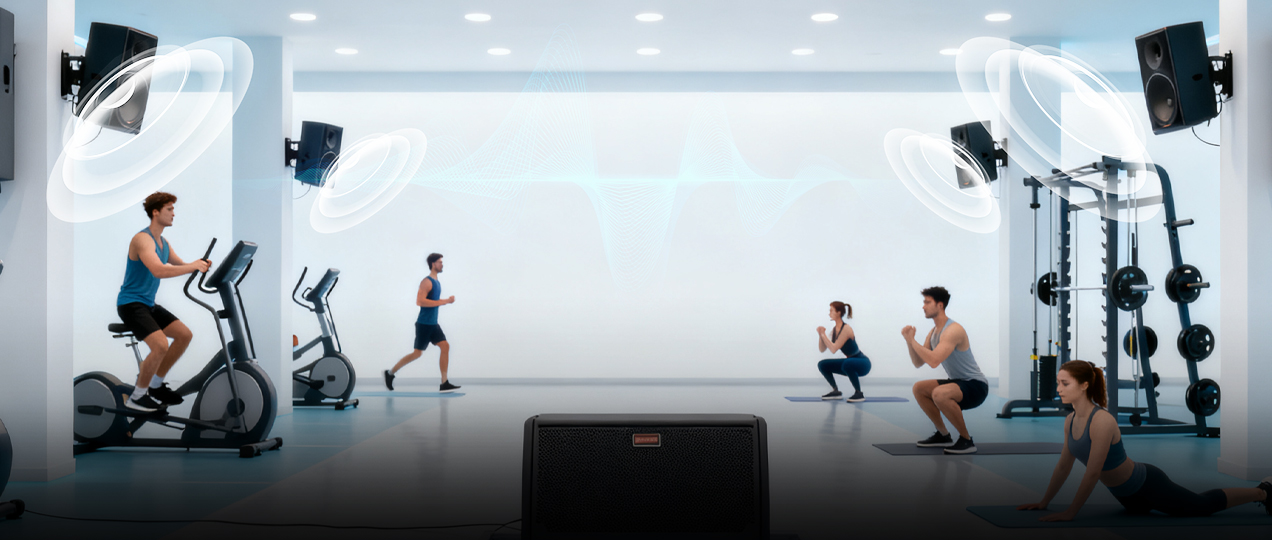
- Dolby Atmos Speaker
- Wi-Fi Card Mode
- BLE gateway
- Smart POS
- Smart home
- Smart thermostat
- Smart door lock
- Battery camera
- Smart remote controller
Development Resources
Software Resources
 |
FreeRTOS SDK Download | Link |
 |
FreeRTOS SDK Guide | Link |
 |
Development Tools | Link |
|
VS Code Extension | Link |
Hardware Resources
|
Datasheet | Link |
|
Pin Multiplexing | Link |
|
Pin Assignment Tool | Link |
 |
Hardware Design Guide | Link |
EVB Purchase
 |
PKE8721DAF-C13-F10 (Taobao) | Link |
|
PKE8721DAF-C13-F10 (Amazon) | Link |
Highlights
In addition to integrating essential peripheral interfaces for IoT development, Secure Boot, AES/SHA hardware encryption engine, authenticated debug access, Wi-Fi, BLE, and other important functions, this IC also supports the following features:
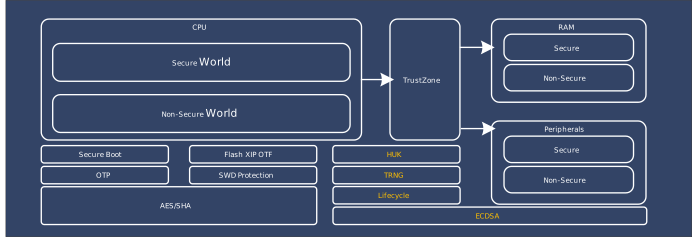
Integrates various security features including TrustZone, asymmetric encryption, TRNG, HUK, OTP storage, Flash XIP decryption, etc., providing security protection for customer products

Incorporating advanced technologies such as OFDMA, MU-MIMO, Extended Range and TWT effectively alleviates wireless resource congestion, enhances weak signal coverage, significantly improves transmission quality, reduces latency and extends the battery life of IoT devices through ultra-long sleep cycles
System Architecture
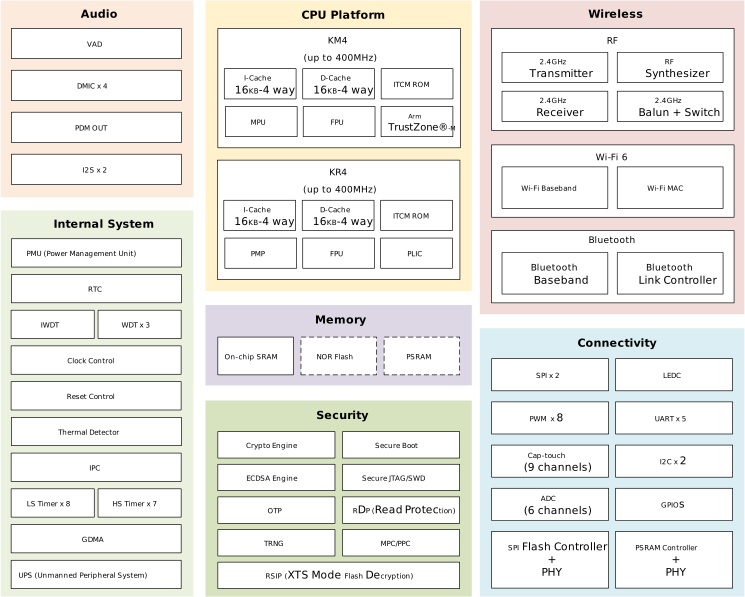
- Armv8.1-M Architecture
- Arm Cortex®-M55 ISA compatible
- Up to 400MHz, 3-stage pipeline
- 16KB I-Cache
- 16KB D-Cache
- FPU/DSP instruction extensions
- Arm TrustZone®-M
- RISC-V RV32IMAFC Architecture
- 400MHz Single-Issue In-Order Pipeline
- 16KB I-Cache
- 16KB D-Cache
- Open-source ISA architecture, supports custom extensions
- 768KB SRAM
- QSPI NOR Flash: Up to 100MHz
- DQ8 DDR PSRAM: Up to 200MHz
Part Number
| Part number | RTL8720EAF-VA2-CG | RTL8720EAF-VA3-CG | RTL8720EAM-VA2-CG | RTL8720EAM-VT2-CG |
|---|---|---|---|---|
| Real-M300 | 400MHz | 400MHz | 400MHz | 400MHz |
| KR4 | 400MHz | 400MHz | 400MHz | 400MHz |
| On-chip SRAM | 768KB | 768KB | 768KB | 768KB |
| TrustZone | ||||
| NOR Flash | 4MB | 8MB | / | / |
| PSRAM | / | / | 4MB | 4MB |
| Wi-Fi | Wi-Fi 6 (2.4GHz) | Wi-Fi 6 (2.4GHz) | Wi-Fi 6 (2.4GHz) | Wi-Fi 6 (2.4GHz) |
| Bluetooth | LE | LE | LE | LE |
| Operating voltage | 2.97V ~ 3.63V | 2.97V ~ 3.63V | 2.97V ~ 3.63V | 2.97V ~ 3.63V |
| Operating temperature | -20°C ~ 85°C | -20°C ~ 85°C | -20°C ~ 85°C | -40°C ~ 105°C |
| Package (mm) | QFN48 (6 x 6) | QFN48 (6 x 6) | QFN48 (6 x 6) | QFN48 (6 x 6) |
Peripheral Interfaces
| FUNCTION | RTL8720EAF | RTL8720EAM |
|---|---|---|
| GPIO | 25 | 18 |
| SPI | 2 | 2 |
| UART | 5 | 5 |
| I2C | 2 | 2 |
| I2S | 2 | 2 |
| PDM | 1 | 1 |
| Digital microphone | 4 | 4 |
| Voice Activity Detection | 1 | 1 |
| ADC and Cap-touch | 10 | 10 |
| SWD Interface | 1 | 1 |
| General Timer | 13 | 13 |
| Capture Timer | 1 | 1 |
| RTC | 1 | 1 |
| NeoPixel LED | 1 | 1 |
| PWM | 8 | 8 |
| IWDG | 1 | 1 |
| System WDG | 3 | 3 |
| GDMA | 8 | 8 |
| Thermal | 1 | 1 |
Security Features
We consistently prioritize security as the core of our products, offering our customers a rich array of security features through hardware design and providing exceptional hardware-based attack resistance, helping to create IoT products with ultimate security.
| Features | RTL872xD | RTL8721Dx | RTL8721F | RTL8720E | RTL8710E | RTL8726E | RTL8713E | RTL8730E | RTL8735B | Comment |
|---|---|---|---|---|---|---|---|---|---|---|
| Symmetric Encryption Engine | ||||||||||
| Asymmetric Encryption Engine | / | / | ||||||||
| Secure Boot | ||||||||||
| Flash OTF Decryption | ||||||||||
| Arm TrustZone®-M | / | / | ||||||||
| EFUSE Secure Storage | ||||||||||
| True Random Number Generator | / | |||||||||
| HUK Derivation Mechanism | / | |||||||||
| Authenticated Debug Access |
In addition to the essential symmetric encryption engines like AES for IoT, we also provide computationally more intensive asymmetric encryption algorithms ECDSA. This greatly alleviates the computational burden on the CPU and improves encryption and decryption speeds
Based on asymmetric encryption and digital signature mechanisms, it verifies public key hashes and firmware signatures. This process can prevent tampering and rollback attacks, ensuring that the device only runs trusted firmware
Supports both embedded and external Flash, with independent key encryption for multiple firmware. When the CPU executes encrypted firmware, it is decrypted in real-time by hardware, with nearly imperceptible performance impact. Supports unique encryption for each device, preventing injection and cloning attacks
Based on the Arm TrustZone® architecture, coupled with a dedicated hardware access control unit, it achieves strong isolation protection for secure memory areas and secure peripherals. Meanwhile, secure firmware is decrypted by the security encryption engine and loaded into the secure RAM area, ensuring protection against leakage and tampering throughout the entire process
Physical-level anti-extraction, key area locked for access only by the security engine, tamper-resistant and read-proof. Supports independent secure zones and CRC verification
Generates high-security random numbers based on physical entropy sources. Certified by NIST for randomness. Provides unpredictability to the system, resistant to prediction attacks
Hardware Unique Key (HUK) with physical isolation protection, unreadable and unclonable, used for secure derivation of application keys
Strict control over debug interface access through authentication mechanisms. Supports authorized access and permanent closure, eliminating physical debug attacks. Meets security management requirements at different stages of the product lifecycle, effectively enhancing overall security
Security Certifications Support
We offer support for multiple security certifications. By providing these advanced security features and certification support, we aim to assist our customers in efficiently meeting various market entry requirements, ensuring the security and competitiveness of their products.
- PSA
- NIST STS
- NIST CAVP
- FIPS 140-3
- RED (EN 18031)
Most of our chips are capable of achieving PSA Certified Level 2 and Level 3, with some chips already having completed PSA Certified Level 2 certification.
Wireless Connectivity
| Wi-Fi Features | ||
|---|---|---|
| Features | Support | Comment |
| Frequency | 2.4GHz | |
| Wi-Fi 6 | ||
| Sub-protocols | 802.11 e/i/w/d/k/v/r | |
| Other Key Protocols | WMM/WPA1~3/WPS/802.1X/EAP/P2P/NAN | |
| UL/DL OFDMA & DL MU-MIMO | ||
| SU/MU Beamformee | ||
| TWT | Target Wake Time | |
| UL LDPC | UL Low-Density Parity-Check Code | |
| DL STBC | DL Space-Time Block Coding | |
| Auto Antenna Diversity | ||
| CSI | Channel State Information | |
| MCC | Multi-Channel Concurrency | |
| Wi-Fi Card Mode | ||
| BT Features | ||
| Features | Support | Comment |
| Bluetooth LE | Bluetooth Low Energy | |
| Scatternet | Scatternet concurrent central/peripheral operation | |
| LE 2Mpbs PHY | ||
| LE Long Range | LE Coded PHY long-range mode (125kbps/500kbps) | |
| LE Advertising Extensions | Support multiple advertising sets | |
| LE Periodic Advertising | ||
| LE Periodic Advertising Sync Transfer | ||
| Direction Finding (AoA/AoD) | Support Angle of Arrival and Angel of Departure | |
| LE Power Control | ||
| SIG Mesh | Certified for SIG Mesh v1.1 | |
System Power Consumption
| Mode | Wi-Fi | Power Consumption | Unit | Comment |
|---|---|---|---|---|
| Deep-Sleep | OFF | 57.4 | µA | PSRAM package |
| Sleep | OFF | 700 | µA | PSRAM package |
| Active | OFF | 20.0 | mA | 1.25v WFI mode, CPU=400MHz |
| WoWLAN | DTIM=3 | 1.48 | mA | 2.4G mode |
| WoWLAN | DTIM=10 | 1.36 | mA | 2.4G mode |
NOTICE:
- Test conditions: 3.3V, 25°C
- WoWLAN: System average power consumption
Application Scenarios
- Home appliance
- Industrial control
- Energy storage
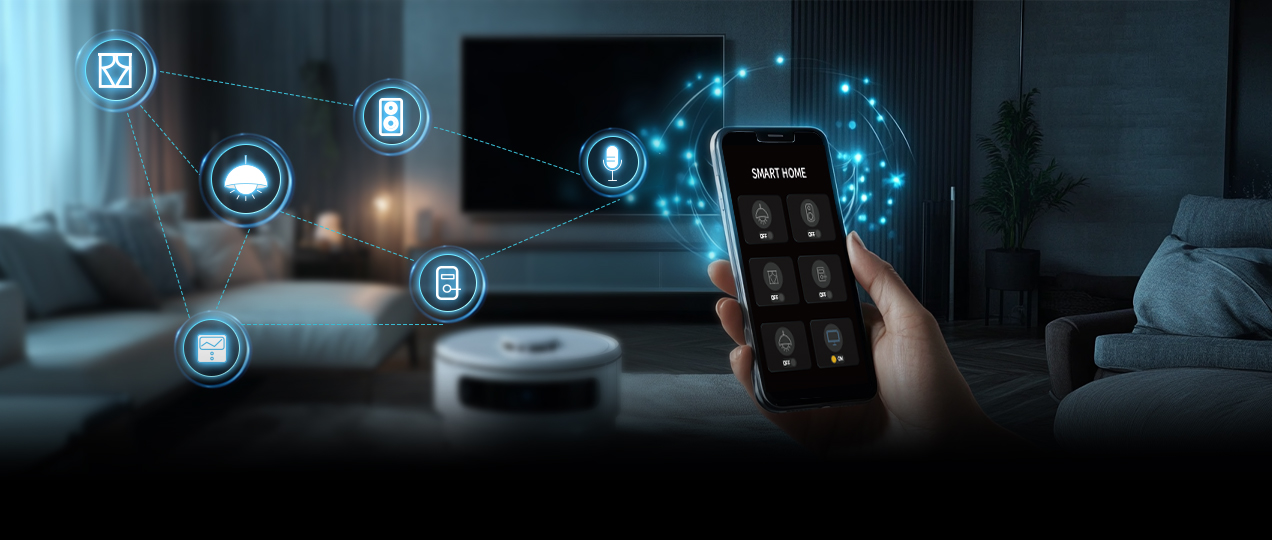
- Smart thermostat
- BLE gateway
- Micro inverter
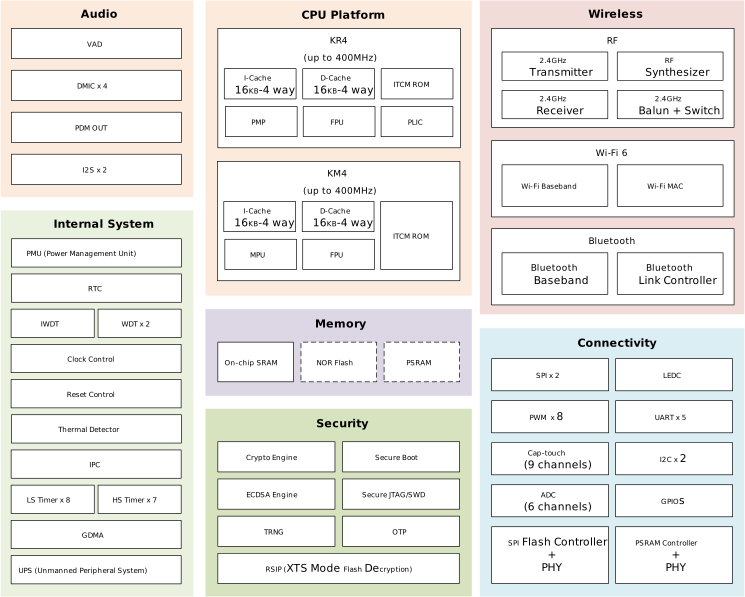
Highlights
In addition to integrating essential peripheral interfaces for IoT development, Secure Boot, AES/SHA hardware encryption engine, authenticated debug access, Wi-Fi, BLE, and other important functions, this IC also supports the following features:
Integrates various security features including asymmetric encryption, TRNG, HUK, OTP storage, Flash XIP decryption, etc., providing security protection for customer products
Incorporating advanced technologies such as OFDMA, MU-MIMO, Extended Range and TWT effectively alleviates wireless resource congestion, enhances weak signal coverage, significantly improves transmission quality, reduces latency and extends the battery life of IoT devices through ultra-long sleep cycles
System Architecture
- Armv8.1-M Architecture
- Arm Cortex®-M55 ISA compatible
- Up to 400MHz, 3-stage pipeline
- 16KB I-Cache
- 16KB D-Cache
- FPU/DSP instruction extensions
- RISC-V RV32IMAFC Architecture
- 400MHz Single-Issue In-Order Pipeline
- 16KB I-Cache
- 16KB D-Cache
- Open-source ISA architecture, supports custom extensions
- 512KB SRAM
- QSPI NOR Flash: Up to 100MHz
- DQ8 DDR PSRAM: Up to 250MHz
Part Number
| Package number | RTL8710ECF-VA2-CG | RTL8710ECF-VA3-CG | RTL8710ECM-VA2-CG |
|---|---|---|---|
| Real-M300 | 400MHz | 400MHz | 400MHz |
| KR4 | 400MHz | 400MHz | 400MHz |
| On-chip SRAM | 512KB | 512KB | 512KB |
| TrustZone | / | / | / |
| NOR Flash | 4MB | 8MB | / |
| PSRAM | / | / | 4MB |
| Wi-Fi | Wi-Fi 6 (2.4GHz) | Wi-Fi 6 (2.4GHz) | Wi-Fi 6 (2.4GHz) |
| Bluetooth | LE | LE | LE |
| Operating voltage | 2.97V ~ 3.63V | 2.97V ~ 3.63V | 2.97V ~ 3.63V |
| Operating temperature | -20°C ~ 85°C | -20°C ~ 85°C | -20°C ~ 85°C |
| Package (mm) | QFN48 (6 x 6) | QFN48 (6 x 6) | QFN48 (6 x 6) |
Peripheral Interfaces
| FUNCTION | RTL8710ECF | RTL8710ECM |
|---|---|---|
| GPIO | 25 | 18 |
| SPI | 2 | 2 |
| UART | 5 | 5 |
| I2C | 2 | 2 |
| I2S | 2 | 2 |
| PDM | 1 | 1 |
| Digital microphone | 4 | 4 |
| Voice Activity Detection | 1 | 1 |
| ADC and Cap-touch | 10 | 10 |
| SWD Interface | 1 | 1 |
| General Timer | 13 | 13 |
| Capture Timer | 1 | 1 |
| RTC | 1 | 1 |
| NeoPixel LED | 1 | 1 |
| PWM | 8 | 8 |
| IWDG | 1 | 1 |
| System WDG | 2 | 2 |
| GDMA | 8 | 8 |
| Thermal | 1 | 1 |
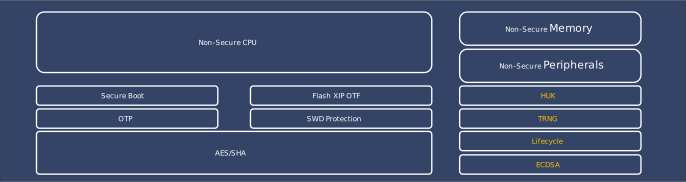
Security Features
We consistently prioritize security as the core of our products, offering our customers a rich array of security features through hardware design and providing exceptional hardware-based attack resistance, helping to create IoT products with ultimate security.
| Features | RTL872xD | RTL8721Dx | RTL8721F | RTL8720E | RTL8710E | RTL8726E | RTL8713E | RTL8730E | RTL8735B | Comment |
|---|---|---|---|---|---|---|---|---|---|---|
| Symmetric Encryption Engine | ||||||||||
| Asymmetric Encryption Engine | / | / | ||||||||
| Secure Boot | ||||||||||
| Flash OTF Decryption | ||||||||||
| Arm TrustZone®-M | / | / | ||||||||
| EFUSE Secure Storage | ||||||||||
| True Random Number Generator | / | |||||||||
| HUK Derivation Mechanism | / | |||||||||
| Authenticated Debug Access |
In addition to the essential symmetric encryption engines like AES for IoT, we also provide computationally more intensive asymmetric encryption algorithms ECDSA. This greatly alleviates the computational burden on the CPU and improves encryption and decryption speeds
Based on asymmetric encryption and digital signature mechanisms, it verifies public key hashes and firmware signatures. This process can prevent tampering and rollback attacks, ensuring that the device only runs trusted firmware
Supports both embedded and external Flash, with independent key encryption for multiple firmware. When the CPU executes encrypted firmware, it is decrypted in real-time by hardware, with nearly imperceptible performance impact. Supports unique encryption for each device, preventing injection and cloning attacks
Physical-level anti-extraction, key area locked for access only by the security engine, tamper-resistant and read-proof. Supports independent secure zones and CRC verification
Generates high-security random numbers based on physical entropy sources. Certified by NIST for randomness. Provides unpredictability to the system, resistant to prediction attacks
Hardware Unique Key (HUK) with physical isolation protection, unreadable and unclonable, used for secure derivation of application keys
Strict control over debug interface access through authentication mechanisms. Supports authorized access and permanent closure, eliminating physical debug attacks. Meets security management requirements at different stages of the product lifecycle, effectively enhancing overall security
Security Certifications Support
We offer support for multiple security certifications. By providing these advanced security features and certification support, we aim to assist our customers in efficiently meeting various market entry requirements, ensuring the security and competitiveness of their products.
- PSA
- NIST STS
- NIST CAVP
- FIPS 140-3
- RED (EN 18031)
Most of our chips are capable of achieving PSA Certified Level 2 and Level 3, with some chips already having completed PSA Certified Level 2 certification.
Wireless Connectivity
| Wi-Fi Features | ||
|---|---|---|
| Features | Support | Comment |
| Frequency | 2.4GHz | |
| Wi-Fi 6 | ||
| Sub-protocols | 802.11 e/i/w/d/k/v/r | |
| Other Key Protocols | WMM/WPA1~3/WPS/802.1X/EAP/P2P/NAN | |
| UL/DL OFDMA & DL MU-MIMO | ||
| SU/MU Beamformee | ||
| TWT | Target Wake Time | |
| UL LDPC | UL Low-Density Parity-Check Code | |
| DL STBC | DL Space-Time Block Coding | |
| Auto Antenna Diversity | ||
| CSI | Channel State Information | |
| MCC | Multi-Channel Concurrency | |
| Wi-Fi Card Mode | ||
| BT Features | ||
| Features | Support | Comment |
| Bluetooth LE | Bluetooth Low Energy | |
| Scatternet | Scatternet concurrent central/peripheral operation | |
| LE 2Mpbs PHY | ||
| LE Long Range | LE Coded PHY long-range mode (125kbps/500kbps) | |
| LE Advertising Extensions | Support multiple advertising sets | |
| LE Periodic Advertising | ||
| LE Periodic Advertising Sync Transfer | ||
| Direction Finding (AoA/AoD) | Support Angle of Arrival and Angel of Departure | |
| LE Power Control | ||
| SIG Mesh | Certified for SIG Mesh v1.1 | |
System Power Consumption
| Mode | Wi-Fi | Power Consumption | Unit | Comment |
|---|---|---|---|---|
| Deep-Sleep | OFF | 57.4 | µA | PSRAM package |
| Sleep | OFF | 700 | µA | PSRAM package |
| Active | OFF | 20.0 | mA | 1.25v WFI mode, CPU=400MHz |
| WoWLAN | DTIM=3 | 1.48 | mA | 2.4G mode |
| WoWLAN | DTIM=10 | 1.36 | mA | 2.4G mode |
NOTICE:
- Test conditions: 3.3V, 25°C
- WoWLAN: System average power consumption
Application Scenarios
- Home appliance
- Industrial control
- Energy storage
- Smart thermostat
- BLE gateway
- Micro inverter
Development Resources
Software Resources
|
FreeRTOS SDK Download | Link |
|
FreeRTOS SDK Guide | Link |
|
Development Tools | Link |
|
VS Code Extension | Link |
Hardware Resources
|
Datasheet | Link |
|
Pin Multiplexing | Link |
|
Pin Assignment Tool | Link |
|
Hardware Design Guide | Link |
EVB Purchase
|
PKE8710ECF-C53-F20 (Taobao) | Link |
|
PKE8710ECF-C53-F20 (Amazon) | Link |
Highlights
In addition to integrating essential peripheral interfaces for IoT development, Secure Boot, AES/SHA hardware encryption engine, authenticated debug access, Wi-Fi, BLE, and other important functions, this IC also supports the following features:

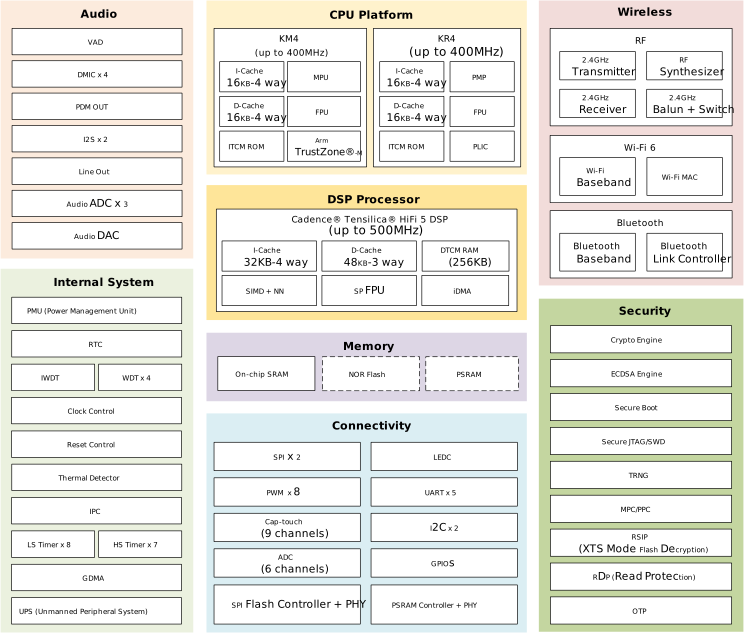
Integrated HiFi5 DSP, architecturally optimized for AI computing, voice wake-up and noise reduction applications. Multi-channel MAC computing capability ensures faster processing. Working with independent application core and network core, three-core collaboration ensures stable low-latency voice applications.
Integrates various security features including TrustZone, asymmetric encryption, TRNG, HUK, OTP storage, Flash XIP decryption, etc., providing security protection for customer products
Incorporating advanced technologies such as OFDMA, MU-MIMO, Extended Range and TWT effectively alleviates wireless resource congestion, enhances weak signal coverage, significantly improves transmission quality, reduces latency and extends the battery life of IoT devices through ultra-long sleep cycles

Built-in audio codec supports audio input and output, reducing dependency on external components and adaptation costs, facilitating voice interaction and audio playback

Bluetooth Classic and Bluetooth Low Energy concurrent, fully compatible with Bluetooth Classic profiles such as A2DP/HFP, achieving seamless coordination of high-definition stereo audio and low-latency call control, enjoying better wireless audio experience
System Architecture
- 500MHz 5-slot VLIW architecture
- 8 x 32-bit MACs/cycle
- 8 x SP-FMACs/cycle
- 32 x 8-bit MACs/cycle
- 256KB dedicated DTCM
- 32KB I-Cache
- 48KB D-Cache
- Armv8.1-M Architecture
- Arm Cortex®-M55 ISA compatible
- Up to 400MHz, 3-stage pipeline
- 16KB I-Cache
- 16KB D-Cache
- FPU/DSP instruction extensions
- Arm TrustZone®-M
- RISC-V RV32IMAFC Architecture
- 400MHz Single-Issue In-Order Pipeline
- 16KB I-Cache
- 16KB D-Cache
- Open-source ISA architecture, supports custom extensions
- 512KB SRAM
- QSPI NOR Flash: Up to 100MHz
- DQ8 DDR PSRAM: Up to 250MHz
Part Number
| Package number | RTL8726EAM-VA4-CG |
|---|---|
| DSP | 500MHz |
| Real-M300 | 400MHz |
| KR4 | 400MHz |
| On-chip SRAM | 512KB |
| TrustZone | Y |
| NOR Flash | X |
| PSRAM | 16MB |
| Wi-Fi | Wi-Fi 6 (2.4GHz) |
| Bluetooth | Dual Mode |
| Operating voltage | 2.97V ~ 3.63V |
| Operating temperature | -20°C ~ 85°C |
| Package (mm) | QFN68 (8 x 8) |
Peripheral Interfaces
| FUNCTION | RTL8726EAM |
|---|---|
| GPIO | 35 |
| SPI | 2 |
| UART | 5 |
| I2C | 2 |
| I2S | 2 |
| PDM | 1 |
| Audio analog output | 1 |
| Digital microphone | 4 |
| Analog microphone | 3 |
| Audio DAC | 1 |
| Voice Activity Detection | 1 |
| ADC and Cap-touch | 10 |
| SWD Interface | 1 |
| General Timer | 13 |
| Capture Timer | 1 |
| RTC | 1 |
| NeoPixel LED | 1 |
| PWM | 8 |
| IWDG | 1 |
| System WDG | 4 |
| GDMA | 8 |
| Thermal | 1 |
Security Features
We consistently prioritize security as the core of our products, offering our customers a rich array of security features through hardware design and providing exceptional hardware-based attack resistance, helping to create IoT products with ultimate security.
| Features | RTL872xD | RTL8721Dx | RTL8721F | RTL8720E | RTL8710E | RTL8726E | RTL8713E | RTL8730E | RTL8735B | Comment |
|---|---|---|---|---|---|---|---|---|---|---|
| Symmetric Encryption Engine | ||||||||||
| Asymmetric Encryption Engine | / | / | ||||||||
| Secure Boot | ||||||||||
| Flash OTF Decryption | ||||||||||
| Arm TrustZone®-M | / | / | ||||||||
| EFUSE Secure Storage | ||||||||||
| True Random Number Generator | / | |||||||||
| HUK Derivation Mechanism | / | |||||||||
| Authenticated Debug Access |
In addition to the essential symmetric encryption engines like AES for IoT, we also provide computationally more intensive asymmetric encryption algorithms ECDSA. This greatly alleviates the computational burden on the CPU and improves encryption and decryption speeds
Based on asymmetric encryption and digital signature mechanisms, it verifies public key hashes and firmware signatures. This process can prevent tampering and rollback attacks, ensuring that the device only runs trusted firmware
Supports both embedded and external Flash, with independent key encryption for multiple firmware. When the CPU executes encrypted firmware, it is decrypted in real-time by hardware, with nearly imperceptible performance impact. Supports unique encryption for each device, preventing injection and cloning attacks
Based on the Arm TrustZone® architecture, coupled with a dedicated hardware access control unit, it achieves strong isolation protection for secure memory areas and secure peripherals. Meanwhile, secure firmware is decrypted by the security encryption engine and loaded into the secure RAM area, ensuring protection against leakage and tampering throughout the entire process
Physical-level anti-extraction, key area locked for access only by the security engine, tamper-resistant and read-proof. Supports independent secure zones and CRC verification
Generates high-security random numbers based on physical entropy sources. Certified by NIST for randomness. Provides unpredictability to the system, resistant to prediction attacks
Hardware Unique Key (HUK) with physical isolation protection, unreadable and unclonable, used for secure derivation of application keys
Strict control over debug interface access through authentication mechanisms. Supports authorized access and permanent closure, eliminating physical debug attacks. Meets security management requirements at different stages of the product lifecycle, effectively enhancing overall security
Security Certifications Support
We offer support for multiple security certifications. By providing these advanced security features and certification support, we aim to assist our customers in efficiently meeting various market entry requirements, ensuring the security and competitiveness of their products.
- PSA
- NIST STS
- NIST CAVP
- FIPS 140-3
- RED (EN 18031)
Most of our chips are capable of achieving PSA Certified Level 2 and Level 3, with some chips already having completed PSA Certified Level 2 certification.
Wireless Connectivity
| Wi-Fi Features | ||
|---|---|---|
| Features | Support | Comment |
| Frequency | 2.4GHz | |
| Wi-Fi 6 | ||
| Sub-protocols | 802.11 e/i/w/d/k/v/r | |
| Other Key Protocols | WMM/WPA1~3/WPS/802.1X/EAP/P2P/NAN | |
| UL/DL OFDMA & DL MU-MIMO | ||
| SU/MU Beamformee | ||
| TWT | Target Wake Time | |
| UL LDPC | UL Low-Density Parity-Check Code | |
| DL STBC | DL Space-Time Block Coding | |
| Auto Antenna Diversity | ||
| CSI | Channel State Information | |
| MCC | Multi-Channel Concurrency | |
| Wi-Fi Card Mode | ||
| BT Features | ||
| Features | Support | Comment |
| Bluetooth Dual Mode | Bluetooth Classic and Bluetooth Low Energy | |
| Bluetooth BR/EDR | Bluetooth basic rate and enhanced data rate | |
| Scatternet | Scatternet concurrent central/peripheral operation | |
| LE 2Mpbs PHY | ||
| LE Long Range | LE Coded PHY long-range mode (125kbps/500kbps) | |
| LE Advertising Extensions | Support multiple advertising sets | |
| LE Periodic Advertising | ||
| LE Periodic Advertising Sync Transfer | ||
| Direction Finding (AoA/AoD) | Support Angle of Arrival and Angel of Departure | |
| LE Power Control | ||
| SIG Mesh | Certified for SIG Mesh v1.1 | |
System Power Consumption
| Mode | Wi-Fi | Power Consumption | Unit | Comment |
|---|---|---|---|---|
| Deep-Sleep | OFF | 57.4 | µA | PSRAM package |
| Sleep | OFF | 700 | µA | PSRAM package |
| Active | OFF | 12.7 | mA | 0.9v WFI mode, CPU=300MHz, DSP=400MHz |
| WoWLAN | DTIM=3 | 1.48 | mA | 2.4G mode |
| WoWLAN | DTIM=10 | 1.36 | mA | 2.4G mode |
NOTICE:
- Test conditions: 3.3V, 25°C
- WoWLAN: System average power consumption
Application Scenarios
- Home appliance
- Smart voice assistant
- Smart bluetooth speaker
- Energy storage
- Intelligent device
- Smart audio
- BLE gateway
- Micro inverter
Highlights
In addition to integrating essential peripheral interfaces for IoT development, Secure Boot, AES/SHA hardware encryption engine, authenticated debug access, Wi-Fi, BLE, and other important functions, this IC also supports the following features:
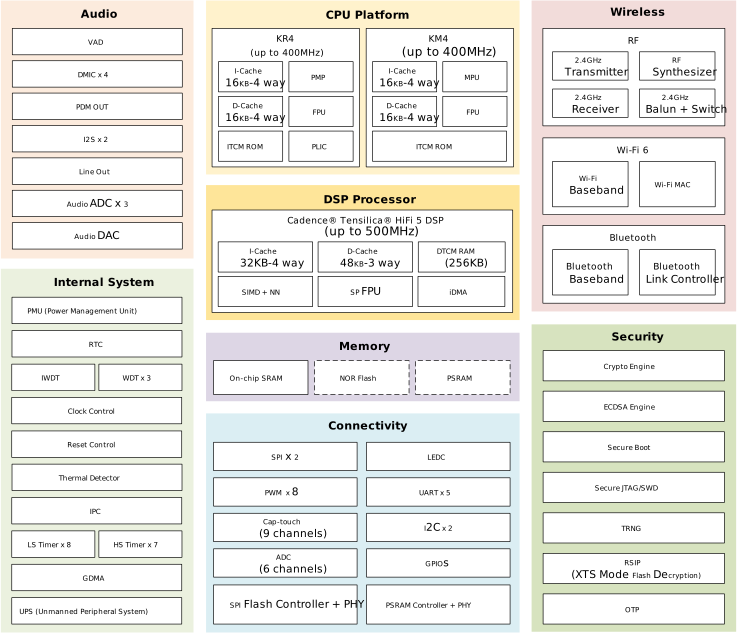
Integrated HiFi5 DSP, architecturally optimized for AI computing, voice wake-up and noise reduction applications. Multi-channel MAC computing capability ensures faster processing. Working with independent application core and network core, three-core collaboration ensures stable low-latency voice applications.
Integrates various security features including asymmetric encryption, TRNG, HUK, OTP storage, Flash XIP decryption, etc., providing security protection for customer products
Incorporating advanced technologies such as OFDMA, MU-MIMO, Extended Range and TWT effectively alleviates wireless resource congestion, enhances weak signal coverage, significantly improves transmission quality, reduces latency and extends the battery life of IoT devices through ultra-long sleep cycles
Built-in audio codec supports audio input and output, reducing dependency on external components and adaptation costs, facilitating voice interaction and audio playback
Bluetooth Classic and Bluetooth Low Energy concurrent, fully compatible with Bluetooth Classic profiles such as A2DP/HFP, achieving seamless coordination of high-definition stereo audio and low-latency call control, enjoying better wireless audio experience
System Architecture
- 500MHz 5-slot VLIW architecture
- 8 x 32-bit MACs/cycle
- 8 x SP-FMACs/cycle
- 32 x 8-bit MACs/cycle
- 256KB dedicated DTCM
- 32KB I-Cache
- 48KB D-Cache
- Armv8.1-M Architecture
- Arm Cortex®-M55 ISA compatible
- Up to 400MHz, 3-stage pipeline
- 16KB I-Cache
- 16KB D-Cache
- FPU/DSP instruction extensions
- RISC-V RV32IMAFC Architecture
- 400MHz Single-Issue In-Order Pipeline
- 16KB I-Cache
- 16KB D-Cache
- Open-source ISA architecture, supports custom extensions
- 512KB SRAM
- QSPI NOR Flash: Up to 100MHz
- DQ8 DDR PSRAM: Up to 250MHz
Part Number
| Package number | RTL8713ECM-VA3-CG | RTL8713ECM-VA4-CG |
|---|---|---|
| DSP | 500MHz | 500MHz |
| Real-M300 | 400MHz | 400MHz |
| KR4 | 400MHz | 400MHz |
| On-chip SRAM | 512KB | 512KB |
| TrustZone | / | / |
| NOR Flash | / | / |
| PSRAM | 8MB | 16MB |
| Wi-Fi | Wi-Fi 6 (2.4GHz) | Wi-Fi 6 (2.4GHz) |
| Bluetooth | Dual Mode | Dual Mode |
| Operating voltage | 2.97V ~ 3.63V | 2.97V ~ 3.63V |
| Operating temperature | -20°C ~ 85°C | -20°C ~ 85°C |
| Package (mm) | QFN68 (8 x 8) | QFN68 (8 x 8) |
Peripheral Interfaces
| FUNCTION | RTL8713ECM |
|---|---|
| GPIO | 35 |
| SPI | 2 |
| UART | 5 |
| I2C | 2 |
| I2S | 2 |
| PDM | 1 |
| Audio analog output | 1 |
| Digital microphone | 4 |
| Analog microphone | 3 |
| Audio DAC | 1 |
| Voice Activity Detection | 1 |
| ADC and Cap-touch | 10 |
| SWD Interface | 1 |
| General Timer | 13 |
| Capture Timer | 1 |
| RTC | 1 |
| NeoPixel LED | 1 |
| PWM | 8 |
| IWDG | 1 |
| System WDG | 3 |
| GDMA | 8 |
| Thermal | 1 |
Security Features
We consistently prioritize security as the core of our products, offering our customers a rich array of security features through hardware design and providing exceptional hardware-based attack resistance, helping to create IoT products with ultimate security.
| Features | RTL872xD | RTL8721Dx | RTL8721F | RTL8720E | RTL8710E | RTL8726E | RTL8713E | RTL8730E | RTL8735B | Comment |
|---|---|---|---|---|---|---|---|---|---|---|
| Symmetric Encryption Engine | ||||||||||
| Asymmetric Encryption Engine | / | / | ||||||||
| Secure Boot | ||||||||||
| Flash OTF Decryption | ||||||||||
| Arm TrustZone®-M | / | / | ||||||||
| EFUSE Secure Storage | ||||||||||
| True Random Number Generator | / | |||||||||
| HUK Derivation Mechanism | / | |||||||||
| Authenticated Debug Access |
In addition to the essential symmetric encryption engines like AES for IoT, we also provide computationally more intensive asymmetric encryption algorithms ECDSA. This greatly alleviates the computational burden on the CPU and improves encryption and decryption speeds
Based on asymmetric encryption and digital signature mechanisms, it verifies public key hashes and firmware signatures. This process can prevent tampering and rollback attacks, ensuring that the device only runs trusted firmware
Supports both embedded and external Flash, with independent key encryption for multiple firmware. When the CPU executes encrypted firmware, it is decrypted in real-time by hardware, with nearly imperceptible performance impact. Supports unique encryption for each device, preventing injection and cloning attacks
Physical-level anti-extraction, key area locked for access only by the security engine, tamper-resistant and read-proof. Supports independent secure zones and CRC verification
Generates high-security random numbers based on physical entropy sources. Certified by NIST for randomness. Provides unpredictability to the system, resistant to prediction attacks
Hardware Unique Key (HUK) with physical isolation protection, unreadable and unclonable, used for secure derivation of application keys
Strict control over debug interface access through authentication mechanisms. Supports authorized access and permanent closure, eliminating physical debug attacks. Meets security management requirements at different stages of the product lifecycle, effectively enhancing overall security
Security Certifications Support
We offer support for multiple security certifications. By providing these advanced security features and certification support, we aim to assist our customers in efficiently meeting various market entry requirements, ensuring the security and competitiveness of their products.
- PSA
- NIST STS
- NIST CAVP
- FIPS 140-3
- RED (EN 18031)
Most of our chips are capable of achieving PSA Certified Level 2 and Level 3, with some chips already having completed PSA Certified Level 2 certification.
Wireless Connectivity
| Wi-Fi Features | ||
|---|---|---|
| Features | Support | Comment |
| Frequency | 2.4GHz | |
| Wi-Fi 6 | ||
| Sub-protocols | 802.11 e/i/w/d/k/v/r | |
| Other Key Protocols | WMM/WPA1~3/WPS/802.1X/EAP/P2P/NAN | |
| UL/DL OFDMA & DL MU-MIMO | ||
| SU/MU Beamformee | ||
| TWT | Target Wake Time | |
| UL LDPC | UL Low-Density Parity-Check Code | |
| DL STBC | DL Space-Time Block Coding | |
| Auto Antenna Diversity | ||
| CSI | Channel State Information | |
| MCC | Multi-Channel Concurrency | |
| Wi-Fi Card Mode | ||
| BT Features | ||
| Features | Support | Comment |
| Bluetooth Dual Mode | Bluetooth Classic and Bluetooth Low Energy | |
| Bluetooth BR/EDR | Bluetooth basic rate and enhanced data rate | |
| Scatternet | Scatternet concurrent central/peripheral operation | |
| LE 2Mpbs PHY | ||
| LE Long Range | LE Coded PHY long-range mode (125kbps/500kbps) | |
| LE Advertising Extensions | Support multiple advertising sets | |
| LE Periodic Advertising | ||
| LE Periodic Advertising Sync Transfer | ||
| Direction Finding (AoA/AoD) | Support Angle of Arrival and Angel of Departure | |
| LE Power Control | ||
| SIG Mesh | Certified for SIG Mesh v1.1 | |
System Power Consumption
| Mode | Wi-Fi | Power Consumption | Unit | Comment |
|---|---|---|---|---|
| Deep-Sleep | OFF | 57.4 | µA | PSRAM package |
| Sleep | OFF | 700 | µA | PSRAM package |
| Active | OFF | 12.7 | mA | 0.9v WFI mode, CPU=300MHz, DSP=400MHz |
| WoWLAN | DTIM=3 | 1.48 | mA | 2.4G mode |
| WoWLAN | DTIM=10 | 1.36 | mA | 2.4G mode |
NOTICE:
- Test conditions: 3.3V, 25°C
- WoWLAN: System average power consumption
Application Scenarios
- Home appliance
- Smart voice assistant
- Smart bluetooth speaker
- Energy storage
- Intelligent device
- Smart audio
- BLE gateway
- Micro inverter
Development Resources
Software Resources
|
HiFi DSP SDK Download | Link |
|
HiFi DSP SDK Guide | Link |
|
FreeRTOS SDK Download | Link |
|
FreeRTOS SDK Guide | Link |
|
Development Tools | Link |
|
VS Code Extension | Link |
Hardware Resources
|
Datasheet | Link |
|
Pin Multiplexing | Link |
|
Pin Assignment Tool | Link |
|
Hardware Design Guide | Link |
EVB Purchase
|
PKE8713ECM-VA4-N43 (Taobao) | Link |
|
PKE8713ECM-VA4-N43 (Amazon) | Link |
Highlights
In addition to integrating essential peripheral interfaces for IoT development, Secure Boot, AES/SHA hardware encryption engine, authenticated debug access, Wi-Fi, BLE, and other important functions, this IC also supports the following features:
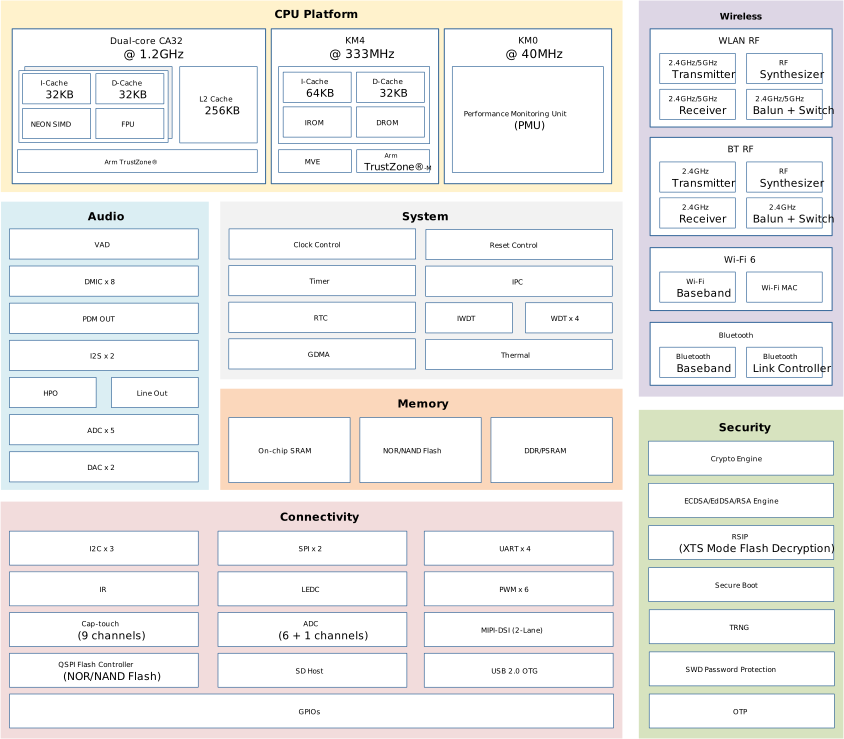
Arm Cortex®-A32 dual-core application processor supports hardware FPU and NEON instruction set, paired with high-speed DDR or PSRAM, providing powerful computing capabilities for multimedia applications, speech recognition, and AI computations. With Linux/RTOS options available, it offers greater convenience for customer development.
Integrates various security features including TrustZone, asymmetric encryption, TRNG, HUK, OTP storage, Flash XIP decryption, etc., providing security protection for customer products
Incorporating advanced technologies such as OFDMA, MU-MIMO, Extended Range and TWT effectively alleviates wireless resource congestion, enhances weak signal coverage, significantly improves transmission quality, reduces latency and extends the battery life of IoT devices through ultra-long sleep cycles
Supporting the 5GHz band to effectively avoid common interference sources (Bluetooth, Zigbee, microwave devices) through spectrum isolation. Leveraging abundant non-overlapping channel resources to significantly reduce co-channel interference risks, delivering high-speed, low-interference stable transmission performance.
Supports standard MIPI display interfaces, flexibly adaptable from small LCDs to HD screens
Built-in audio codec supports audio input and output, reducing dependency on external components and adaptation costs, facilitating voice interaction and audio playback
Bluetooth Classic and Bluetooth Low Energy concurrent, fully compatible with Bluetooth Classic profiles such as A2DP/HFP, and support LE audio, achieving seamless coordination of high-definition stereo audio and low-latency call control, enjoying better wireless audio experience
Independent antenna design for Wi-Fi and Bluetooth, separating Wi-Fi and Bluetooth transmission links, avoiding traditional single-antenna coexistence issues. This simultaneously ensures high-speed Wi-Fi transmission and Bluetooth connection stability, significantly improving coexistence performance and user experience
USB 2.0 High-Speed Host/Device, SD card/eMMC
System Architecture
- Armv8-A architecture (ISA)
- Up to 1.2GHz, 8-stage pipeline
- 32KB I-Cache
- 32KB D-Cache
- 256KB L2 Cache
- Arm TrustZone®
- Armv8.1-M architecture
- Arm Cortex®-M55 ISA compatible
- Up to 333MHz, 3-stage pipeline
- 64KB I-Cache
- 32KB D-Cache
- FPU/DSP/MVE instruction extensions
- Arm TrustZone®-M
- Armv8-M architecture
- Arm Cortex®-M23 ISA compatible
- Optimized for power-critical applications
- Up to 40MHz
- 16KB I-Cache
- 8KB D-Cache
- 256KB SRAM
- QSPI NOR/NAND Flash:up to 100MHz
- DQ8 DDR PSRAM:up to 230MHz
- DQ16 DDR2/DDR3L:up to 533MHz
Part Number
| Package number | RTL8730EAH-VA3-CG | RTL8730EAH-VD3-CG | RTL8730EAH-VH6-CG | RTL8730EAM-VA6-CG | RTL8730ELH-VA3-CG | RTL8730ELM-VA7-CG | RTL8730ELM-VA8-CG |
|---|---|---|---|---|---|---|---|
| CA32 | 1.2GHz | 1.2GHz | 1.2GHz | 1.2GHz | 1.2GHz | 1.2GHz | 1.2GHz |
| Real-M300 | 333MHz | 333MHz | 333MHz | 333MHz | 333MHz | 333MHz | 333MHz |
| Real-M200 | 40MHz | 40MHz | 40MHz | 40MHz | 40MHz | 40MHz | 40MHz |
| On-chip SRAM | 256KB | 256KB | 256KB | 256KB | 256KB | 256KB | 256KB |
| TrustZone | |||||||
| NOR Flash | 8MB | 16MB | 32MB | / | 8MB | / | / |
| PSRAM | 8MB | 8MB | / | / | 8MB | / | / |
| DDR | / | / | 64MB (DDR2) | 64MB (DDR2) | / | 128MB (DDR2) | 256MB (DDR3L) |
| Linux | / | / | / | ||||
| Wi-Fi | Wi-Fi 6 (Dual Band) | Wi-Fi 6 (Dual Band) | Wi-Fi 6 (Dual Band) | Wi-Fi 6 (Dual Band) | Wi-Fi 6 (Dual Band) | Wi-Fi 6 (Dual Band) | Wi-Fi 6 (Dual Band) |
| Bluetooth | Dual Mode | Dual Mode | Dual Mode | Dual Mode | Dual Mode | Dual Mode | Dual Mode |
| Operating voltage | 2.97V ~ 3.63V | 2.97V ~ 3.63V | 2.97V ~ 3.63V | 2.97V ~ 3.63V | 2.97V ~ 3.63V | 2.97V ~ 3.63V | 2.97V ~ 3.63V |
| Operating temperature | -20°C ~ 85°C | -20°C ~ 85°C | -20°C ~ 85°C | -20°C ~ 85°C | -20°C ~ 85°C | -20°C ~ 85°C | -20°C ~ 85°C |
| Package (mm) | QFN100 (10 x 10) | QFN100 (10 x 10) | QFN100 (10 x 10) | QFN100 (10 x 10) | DR-QFN144 (11 x 11) | DR-QFN144 (11 x 11) | DR-QFN144 (11 x 11) |
Peripheral Interfaces
| FUNCTION | RTL8730EAH | RTL8730EAM | RTL8730ELH | RTL8730ELM |
|---|---|---|---|---|
| GPIO | 38 | 32 | 59 | 53 |
| SPI | 2 | 2 | 2 | 2 |
| UART | 4 | 4 | 4 | 4 |
| I2C | 3 | 3 | 3 | 3 |
| MIPI | 1 | 1 | 1 | 1 |
| I2S | 2 | 2 | 2 | 2 |
| PDM | 2 | 2 | 2 | 2 |
| Audio analog output | 2 | 2 | 2 | 2 |
| Digital microphone | 8 | 8 | 8 | 8 |
| Analog microphone | 4 | 4 | 5 | 5 |
| Audio DAC | 2 | 2 | 2 | 2 |
| Voice Activity Detection | 1 | 1 | 1 | 1 |
| ADC and Cap-touch | 4 | 4 | 9 | 9 |
| Infrared Transeiver | 1 | 1 | 1 | 1 |
| SWD Interface | 1 | 1 | 1 | 1 |
| General Timer | 12 | 12 | 12 | 12 |
| Capture Timer | 1 | 1 | 1 | 1 |
| RTC | 1 | 1 | 1 | 1 |
| NeoPixel LED | 1 | 1 | 1 | 1 |
| PWM | 6 | 6 | 6 | 6 |
| USB | 1 | 1 | 1 | 1 |
| SDIO_HOST | 1 | 1 | 1 | 1 |
| IWDG | 1 | 1 | 1 | 1 |
| System WDG | 4 | 4 | 4 | 4 |
| GDMA | 8 | 8 | 8 | 8 |
| Thermal | 1 | 1 | 1 | 1 |
Security Features
We consistently prioritize security as the core of our products, offering our customers a rich array of security features through hardware design and providing exceptional hardware-based attack resistance, helping to create IoT products with ultimate security.
| Features | RTL872xD | RTL8721Dx | RTL8721F | RTL8720E | RTL8710E | RTL8726E | RTL8713E | RTL8730E | RTL8735B | Comment |
|---|---|---|---|---|---|---|---|---|---|---|
| Symmetric Encryption Engine | ||||||||||
| Asymmetric Encryption Engine | / | / | ||||||||
| Secure Boot | ||||||||||
| Flash OTF Decryption | ||||||||||
| Arm TrustZone®-M | / | / | ||||||||
| EFUSE Secure Storage | ||||||||||
| True Random Number Generator | / | |||||||||
| HUK Derivation Mechanism | / | |||||||||
| Authenticated Debug Access |
In addition to the essential symmetric encryption engines like AES for IoT, we also provide computationally more intensive asymmetric encryption algorithms such as ECDSA, EdDSA, and RSA. This greatly alleviates the computational burden on the CPU and improves encryption and decryption speeds
Based on asymmetric encryption and digital signature mechanisms, it verifies public key hashes and firmware signatures. This process can prevent tampering and rollback attacks, ensuring that the device only runs trusted firmware
Supports both embedded and external Flash, with independent key encryption for multiple firmware. When the CPU executes encrypted firmware, it is decrypted in real-time by hardware, with nearly imperceptible performance impact. Supports unique encryption for each device, preventing injection and cloning attacks
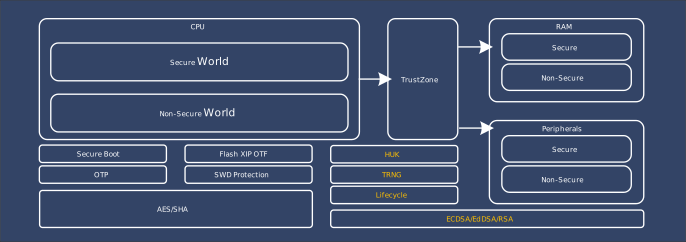
Based on the Arm TrustZone® architecture, coupled with a dedicated hardware access control unit, it achieves strong isolation protection for secure memory areas and secure peripherals. Meanwhile, secure firmware is decrypted by the security encryption engine and loaded into the secure RAM area, ensuring protection against leakage and tampering throughout the entire process
Physical-level anti-extraction, key area locked for access only by the security engine, tamper-resistant and read-proof. Supports independent secure zones and CRC verification
Generates high-security random numbers based on physical entropy sources. Certified by NIST for randomness. Provides unpredictability to the system, resistant to prediction attacks
Hardware Unique Key (HUK) with physical isolation protection, unreadable and unclonable, used for secure derivation of application keys
Strict control over debug interface access through authentication mechanisms. Supports authorized access and permanent closure, eliminating physical debug attacks. Meets security management requirements at different stages of the product lifecycle, effectively enhancing overall security
Security Certifications Support
We offer support for multiple security certifications. By providing these advanced security features and certification support, we aim to assist our customers in efficiently meeting various market entry requirements, ensuring the security and competitiveness of their products.
- PSA
- NIST STS
- NIST CAVP
- FIPS 140-3
- RED (EN 18031)
Most of our chips are capable of achieving PSA Certified Level 2 and Level 3, with some chips already having completed PSA Certified Level 2 certification.
Wireless Connectivity
| Wi-Fi Features | ||
|---|---|---|
| Features | Support | Comment |
| Frequency | 2.4GHz/5GHz | |
| Wi-Fi 6 | ||
| Bandwidth | 20MHz | |
| MaximumPHY rate | 114.7Mbps | HE MCS9 |
| Main Protocols | 802.11 a/b/g/n/ac/ax | |
| Sub-protocols | 802.11 e/i/w/d/k/v/r | |
| Other Key Protocols | WMM/WPA1~3/WPS/802.1X/EAP/P2P/NAN | |
| UL/DL OFDMA & DL MU-MIMO | ||
| SU/MU Beamformee | ||
| TWT | Target Wake Time | |
| UL LDPC | UL Low-Density Parity-Check Code | |
| DL STBC | DL Space-Time Block Coding | |
| Auto Antenna Diversity | ||
| CSI | Channel State Information | |
| MCC | Multi-Channel Concurrency | |
| BT Features | ||
| Features | Support | Comment |
| Bluetooth Dual Mode | Bluetooth Classic and Bluetooth Low Energy | |
| Bluetooth BR/EDR | Bluetooth basic rate and enhanced data rate | |
| Scatternet | Scatternet concurrent central/peripheral operation | |
| LE 2Mpbs PHY | ||
| LE Long Range | LE Coded PHY long-range mode (125kbps/500kbps) | |
| LE Advertising Extensions | Support multiple advertising sets | |
| LE Periodic Advertising | ||
| LE Periodic Advertising Sync Transfer | ||
| Direction Finding (AoA/AoD) | Support Angle of Arrival and Angel of Departure | |
| LE Isochronous Channels (CIS/BIS) | Support Connected Isochronous Stream and Broadcast Isochronous Stream | |
| LE Power Control | ||
| SIG Mesh | Certified for SIG Mesh v1.1 | |
| LE Audio | Support Auracast Broadcast Audio | |
| Dedicated antenna for Bluetooth | Wi-Fi and Bluetooth each use their own RF and antenna, significantly improving coexistence performance | |
System Power Consumption
| Mode | Wi-Fi | Power Consumption | Unit | Comment |
|---|---|---|---|---|
| Deep-Sleep | OFF | 23.1 | µA | RTL8730EAH-VA3 |
| Sleep | OFF | 345 | µA | RTL8730EAH-VA3 |
| Active | OFF | 17.6 | mA | 0.9v WFI mode, CA32=460MHz |
| WoWLAN | DTIM=3 | 691 | µA | 2.4G mode |
| WoWLAN | DTIM=10 | 470 | µA | 2.4G mode |
NOTICE:
- Test conditions: 3.3V, 25°C
- WoWLAN: System average power consumption
Application Scenarios
- Smart speaker
- Industrial gateway
- Voice-controlled appliance
- Smart thermostat
- Smart panel
- Smart home
- Wearable devices
- Centralized control system
- Ethernet to Wi-Fi dongle

Highlights
In addition to integrating essential peripheral interfaces for IoT development, Secure Boot, AES/SHA hardware encryption engine, authenticated debug access, Wi-Fi, BLE, and other important functions, this IC also supports the following features:
Integrates various security features including TrustZone, asymmetric encryption, TRNG, HUK, OTP storage, Flash XIP decryption, etc., providing security protection for customer products
Incorporating advanced technologies such as OFDMA, MU-MIMO, Extended Range and TWT effectively alleviates wireless resource congestion, enhances weak signal coverage, significantly improves transmission quality, reduces latency and extends the battery life of IoT devices through ultra-long sleep cycles
Supporting the 5GHz band to effectively avoid common interference sources (Bluetooth, Zigbee, microwave devices) through spectrum isolation. Leveraging abundant non-overlapping channel resources to significantly reduce co-channel interference risks, delivering high-speed, low-interference stable transmission performance.
Intelligent multi-hop multi-branch networking, significantly extending AP connection range; Underlying forwarding and control, transparent to application-layer development, eliminates traditional Mesh adaptation constraints; Rapid self-healing, ultra-low latency, ultra-high stability, comprehensively breaking traditional Mesh performance bottlenecks.
Equipped with a UI rendering hardware accelerator and an MJPEG hardware decoder to enhance HMI performance on smart panels; supports standard display interfaces for flexible adaptation from small LCDs to high‑definition screens.

Integrated Ethernet interface ensures reliable transmission of critical data in industrial environments and high-interference scenarios. Suitable for applications with stringent network stability requirements such as industrial automation and security monitoring
Supporting ultra-low-power WoWLAN and enabling rapid restoration of the original runtime context, empowering battery-powered devices with network listening wake-up functionality
USB 2.0 High-Speed Host/Device, SDIO Host/Device, SD card/eMMC
System Architecture
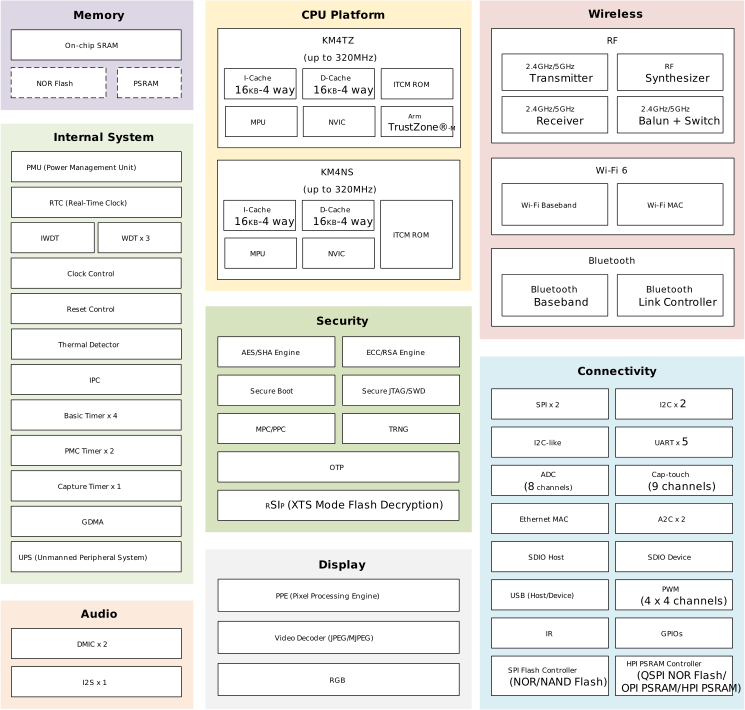
- Armv8.1-M Architecture
- Arm Cortex®-M55 ISA compatible
- Up to 334MHz, 3-stage pipeline
- 16KB I-Cache
- 16KB D-Cache
- Arm TrustZone®-M
- Armv8.1-M Architecture
- Arm Cortex®-M55 ISA compatible
- Up to 334MHz, 3-stage pipeline
- 16KB I-Cache
- 16KB D-Cache
- 512KB SRAM
- QSPI NOR/NAND Flash: Up to 104MHz
- DQ8/DQ16 DDR PSRAM: Up to 200MHz
Part Number
| Part number | RTL8721FAF-VT2-CG | RTL8721FAF-VA3-CG | RTL8721FAM-VT2-CG | RTL8721FCM-VA2-CG | RTL8721FCM-VA3-CG | RTL8721FCM-VA4-CG | RTL8721FLM-VA4-CG |
|---|---|---|---|---|---|---|---|
| Real-M300 (KM4TZ) | 320MHz | 320MHz | 320MHz | 320MHz | 320MHz | 320MHz | 320MHz |
| Real-M300 (KM4NS) | 320MHz | 320MHz | 320MHz | 320MHz | 320MHz | 320MHz | 320MHz |
| On-chip SRAM | 512KB | 512KB | 512KB | 512KB | 512KB | 512KB | 512KB |
| TrustZone | |||||||
| NOR Flash | 4MB | 8MB | / | / | / | / | / |
| PSRAM | / | / | 4MB | 4MB | 8MB | 16MB | 16MB |
| Wi-Fi | Wi-Fi 6 (Dual Band) | Wi-Fi 6 (Dual Band) | Wi-Fi 6 (Dual Band) | Wi-Fi 6 (Dual Band) | Wi-Fi 6 (Dual Band) | Wi-Fi 6 (Dual Band) | Wi-Fi 6 (Dual Band) |
| Bluetooth | LE | LE | LE | LE | LE | LE | LE |
| Operating voltage | 2.97V ~ 3.63V | 2.97V ~ 3.63V | 2.97V ~ 3.63V | 2.97V ~ 3.63V | 2.97V ~ 3.63V | 2.97V ~ 3.63V | 2.97V ~ 3.63V |
| Operating temperature | -40°C ~ 105°C | -20°C ~ 85°C | -40°C ~ 105°C | -20°C ~ 85°C | -20°C ~ 85°C | -20°C ~ 85°C | -20°C ~ 85°C |
| Package (mm) | QFN48 (6 x 6) | QFN48 (6 x 6) | QFN48 (6 x 6) | QFN68 (8 x 8) | QFN68 (8 x 8) | QFN68 (8 x 8) | QFN100 (10 x 10) |
Peripheral Interfaces
| FUNCTION | RTL8721FAF | RTL8721FAM | RTL8721FCM | RTL8721FLM |
|---|---|---|---|---|
| GPIO | 19 | 12 | 31 | 60 |
| SPI | 2 | 2 | 2 | 2 |
| UART | 5 | 5 | 5 | 5 |
| I2C | 2 | 2 | 2 | 2 |
| LCD Controller | 1 | 1 | 1 | 1 |
| A2C | 2 | 2 | 2 | 2 |
| I2S | 1 | 1 | 1 | 1 |
| Digital microphone | 2 | 2 | 2 | 2 |
| ADC and Cap-touch | 4 | 4 | 11 | 13 |
| Infrared Transeiver | 1 | 1 | 1 | 1 |
| SWD Interface | 1 | 1 | 1 | 1 |
| General Timer | 4 | 4 | 4 | 4 |
| Capture Timer | 1 | 1 | 1 | 1 |
| RTC | 1 | 1 | 1 | 1 |
| LEDC_Pro | 1 | 1 | 1 | 1 |
| PWM | 16 | 16 | 16 | 16 |
| USB | 1 | 1 | 1 | 1 |
| Ethernet Interface | 1 | 1 | 1 | 1 |
| SDIO_HOST | 1 | 1 | 1 | 1 |
| SDIO_DEVICE | 1 | 1 | 1 | 1 |
| IWDG | 1 | 1 | 1 | 1 |
| System WDG | 3 | 3 | 3 | 3 |
| GDMA | 8 | 8 | 8 | 8 |
| Thermal | 1 | 1 | 1 | 1 |
Security Features
We consistently prioritize security as the core of our products, offering our customers a rich array of security features through hardware design and providing exceptional hardware-based attack resistance, helping to create IoT products with ultimate security.
| Features | RTL872xD | RTL8721Dx | RTL8721F | RTL8720E | RTL8710E | RTL8726E | RTL8713E | RTL8730E | RTL8735B | Comment |
|---|---|---|---|---|---|---|---|---|---|---|
| Symmetric Encryption Engine | ||||||||||
| Asymmetric Encryption Engine | / | / | ||||||||
| Secure Boot | ||||||||||
| Flash OTF Decryption | ||||||||||
| Arm TrustZone®-M | / | / | ||||||||
| EFUSE Secure Storage | ||||||||||
| True Random Number Generator | / | |||||||||
| HUK Derivation Mechanism | / | |||||||||
| Authenticated Debug Access |
In addition to the essential symmetric encryption engines like AES for IoT, we also provide computationally more intensive asymmetric encryption algorithms such as ECDSA, EdDSA, and RSA. This greatly alleviates the computational burden on the CPU and improves encryption and decryption speeds
Based on asymmetric encryption and digital signature mechanisms, it verifies public key hashes and firmware signatures. This process can prevent tampering and rollback attacks, ensuring that the device only runs trusted firmware
Supports both embedded and external Flash, with independent key encryption for multiple firmware. When the CPU executes encrypted firmware, it is decrypted in real-time by hardware, with nearly imperceptible performance impact. Supports unique encryption for each device, preventing injection and cloning attacks
Based on the Arm TrustZone® architecture, coupled with a dedicated hardware access control unit, it achieves strong isolation protection for secure memory areas and secure peripherals. Meanwhile, secure firmware is decrypted by the security encryption engine and loaded into the secure RAM area, ensuring protection against leakage and tampering throughout the entire process
Physical-level anti-extraction, key area locked for access only by the security engine, tamper-resistant and read-proof. Supports independent secure zones and CRC verification
Generates high-security random numbers based on physical entropy sources. Certified by NIST for randomness. Provides unpredictability to the system, resistant to prediction attacks
Hardware Unique Key (HUK) with physical isolation protection, unreadable and unclonable, used for secure derivation of application keys
Strict control over debug interface access through authentication mechanisms. Supports authorized access and permanent closure, eliminating physical debug attacks. Meets security management requirements at different stages of the product lifecycle, effectively enhancing overall security
Security Certifications Support
We offer support for multiple security certifications. By providing these advanced security features and certification support, we aim to assist our customers in efficiently meeting various market entry requirements, ensuring the security and competitiveness of their products.
- PSA
- NIST STS
- NIST CAVP
- FIPS 140-3
- RED (EN 18031)
Most of our chips are capable of achieving PSA Certified Level 2 and Level 3, with some chips already having completed PSA Certified Level 2 certification.
Wireless Connectivity
| Wi-Fi Features | ||
|---|---|---|
| Features | Support | Comment |
| Frequency | 2.4GHz/5GHz | |
| Wi-Fi 6 | ||
| Bandwidth | 20MHz | |
| MaximumPHY rate | 114.7Mbps | HE MCS9 |
| Main Protocols | 802.11 a/b/g/n/ac/ax | |
| Sub-protocols | 802.11 e/i/w/d/k/v/r | |
| Other Key Protocols | WMM/WPA1~3/WPS/802.1X/EAP/P2P/NAN | |
| UL/DL OFDMA & DL MU-MIMO | ||
| SU/MU Beamformee | ||
| TWT | Target Wake Time | |
| UL LDPC | UL Low-Density Parity-Check Code | |
| DL STBC | DL Space-Time Block Coding | |
| Auto Antenna Diversity | ||
| CSI | Channel State Information | |
| MCC | Multi-Channel Concurrency | |
| R-MESH | Realtek MESH | |
| Wi-Fi Card Mode | ||
| BT Features | ||
| Features | Support | Comment |
| Bluetooth LE | Bluetooth Low Energy | |
| Scatternet | Scatternet concurrent central/peripheral operation | |
| LE 2Mpbs PHY | ||
| LE Long Range | LE Coded PHY long-range mode (125kbps/500kbps) | |
| LE Advertising Extensions | Support multiple advertising sets | |
| SIG Mesh | Certified for SIG Mesh v1.1 | |
System Power Consumption
| Mode | Wi-Fi | Power Consumption | Unit | Comment |
|---|---|---|---|---|
| Deep-Sleep | OFF | 11.3 | µA | Flash package |
| Sleep | OFF | 48.2 | µA | Flash package |
| Active | OFF | 13.1 | mA | 0.9v WFI mode, CPU=266MHz |
| WoWLAN | DTIM=3 | 185 | µA | 2.4G mode |
| WoWLAN | DTIM=10 | 100 | µA | 2.4G mode |
NOTICE:
- Test conditions: 3.3V, 25°C
- WoWLAN: System average power consumption
Application Scenarios
- Smart home
- Lighting (dimming) control, switch and plugs
- Home and kitchen appliances
- Industrial 4.0
- Low-power IoT devices
- Smart door lock
- Low-power Wi-Fi camera
- HMI smart display
- Health-care devices
- Wearables
- Portable devices
- Gaming accessories
- Wireless audio
- New energy field
- Ethernet to Wi-Fi dongle
Highlights
In addition to integrating essential peripheral interfaces for IoT development, Secure Boot, AES/SHA hardware encryption engine, authenticated debug access, Wi-Fi, BLE, and other important functions, this IC also supports the following features:
Integrates various security features including TrustZone, EFUSE storage, Flash XIP decryption, etc., to safeguard the security of customer products
Supporting the 5GHz band to effectively avoid common interference sources (Bluetooth, Zigbee, microwave devices) through spectrum isolation. Leveraging abundant non-overlapping channel resources to significantly reduce co-channel interference risks, delivering high-speed, low-interference stable transmission performance.
Supports standard display interfaces, flexibly adaptable from small LCDs to HD screens
Built-in audio codec supports audio input and output, reducing dependency on external components and adaptation costs, facilitating voice interaction and audio playback
Supporting ultra-low-power WoWLAN and enabling rapid restoration of the original runtime context, empowering battery-powered devices with network listening wake-up functionality
USB 2.0 High-Speed Host/Device, SD card/eMMC
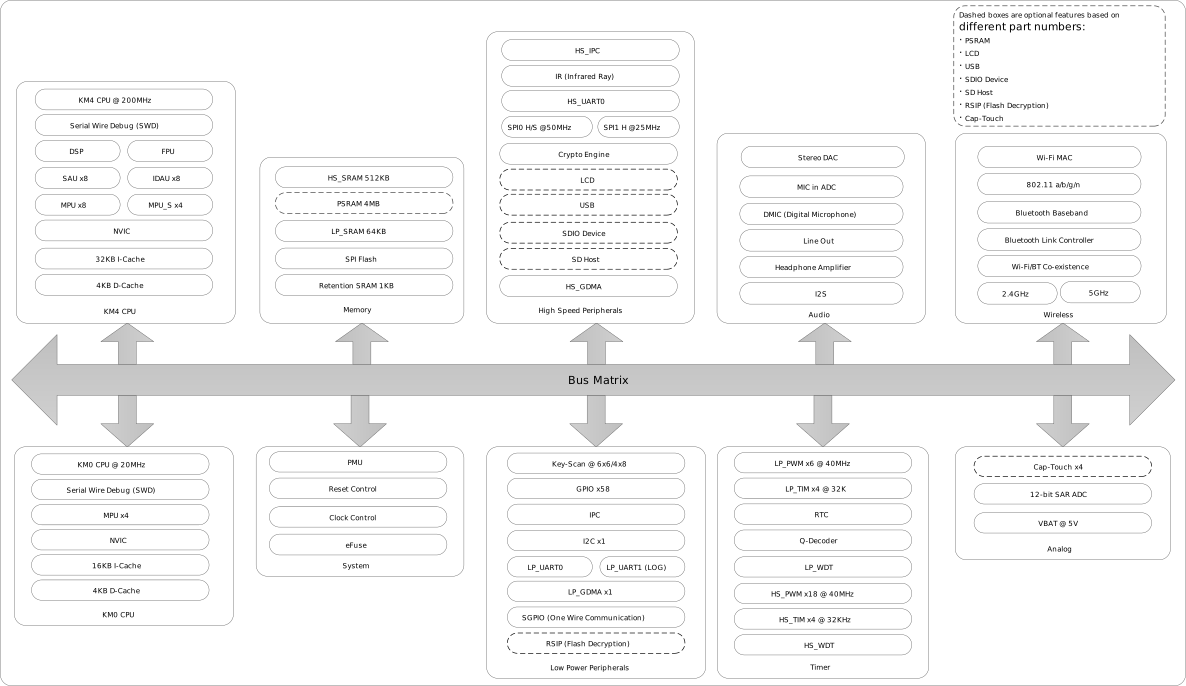
System Architecture
- Armv8-M Architecture
- Arm Cortex®-M33 ISA compatible
- Up to 200MHz
- 32KB I-Cache
- 4KB D-Cache
- FPU/DSP instruction extensions
- Arm TrustZone®-M
- Armv8-M Architecture
- Arm Cortex®-M23 ISA compatible
- Up to 20MHz
- 16KB I-Cache
- 4KB D-Cache
- Real-300: 512KB SRAM
- Real-300: 4MB PSRAM, 8-bit DDR
- Real-200: 64KB SRAM
- Real-200: 1KB retention SRAM, retains data in power-saving mode
Part Number
| Part number | RTL8720DN-VA1-CG | RTL8720DN-VT1-CG | RTL8720DM-VA1-CG | RTL8720DF-VA1-CG | RTL8720DF-VT1-CG | RTL8721DM-VA1-CG | RTL8722DM-VA1-CG | RTL8722DM-VP1-CG |
|---|---|---|---|---|---|---|---|---|
| Real-M300 | 200MHz | 200MHz | 200MHz | 200MHz | 200MHz | 200MHz | 200MHz | 200MHz |
| Real-M200 | 40MHz | 40MHz | 40MHz | 40MHz | 40MHz | 40MHz | 40MHz | 40MHz |
| On-chip SRAM | 512KB | 512KB | 512KB | 512KB | 512KB | 512KB | 512KB | 512KB |
| TrustZone | ||||||||
| NOR Flash | / | / | / | 4MB | 4MB | / | / | / |
| PSRAM | / | / | 4MB | / | / | 4MB | 4MB | 4MB |
| Wi-Fi | Wi-Fi 4 (Dual Band) | Wi-Fi 4 (Dual Band) | Wi-Fi 4 (Dual Band) | Wi-Fi 4 (Dual Band) | Wi-Fi 4 (Dual Band) | Wi-Fi 4 (Dual Band) | Wi-Fi 4 (Dual Band) | Wi-Fi 4 (Dual Band) |
| Bluetooth | LE | LE | LE | LE | LE | LE | LE | LE |
| Operating voltage | 2.97V ~ 3.63V | 2.97V ~ 3.63V | 2.97V ~ 3.63V | 2.97V ~ 3.63V | 2.97V ~ 3.63V | 2.97V ~ 3.63V | 2.97V ~ 3.63V | 2.97V ~ 3.63V |
| Operating temperature | -20°C ~ 85°C | -40°C ~ 105°C | -20°C ~ 85°C | -20°C ~ 85°C | -40°C ~ 105°C | -20°C ~ 85°C | -20°C ~ 85°C | -20°C ~ 85°C |
| Package (mm) | QFN48 (6 x 6) | QFN48 (6 x 6) | QFN48 (6 x 6) | QFN48 (6 x 6) | QFN48 (6 x 6) | QFN68 (8 x 8) | QFN88 (10 x 10) | QFN88 (10 x 10) |
Peripheral Interfaces
| FUNCTION | RTL8720DF-VA1 | RTL8720DF-VT1 | RTL8720DN-VA1 | RTL8720DM-VA1 | RTL8721DM-VA1 | RTL8721DN-VRC | RTL8722DM-VA1 | RTL8722DM-VP1 |
|---|---|---|---|---|---|---|---|---|
| GPIO | 20 | 20 | 19 | 19 | 32 | 52 | 52 | |
| SPI | 3 | 3 | 2 | 2 | 3 | 3 | 3 | |
| UART | 4 | 4 | 4 | 4 | 3 | 4 | 4 | |
| I2C | 2 | 2 | 2 | 2 | 1 | 2 | 2 | |
| LCD Controller | 1 | |||||||
| I2S | 1 | 1 | 1 | 1 | 1 | |||
| Audio analog output | 2 | 2 | ||||||
| Digital microphone | 2 | 2 | 2 | 2 | 2 | 2 | 2 | |
| Analog microphone | 1 | |||||||
| ADC and Cap-touch | 3 | 3 | 3 | 3 | 7 | 7 | 7 | |
| Infrared Transeiver | 1 | 1 | 1 | 1 | 1 | 1 | 1 | |
| Key-Scan | 5 x 4 | 5 x 4 | 5 x 4 | 5 x 4 | 7 x 7 | 8 x 8 | 8 x 8 | |
| SWD Interface | 1 | 1 | 1 | 1 | 1 | 1 | 1 | |
| PWM | 13 | 13 | 8 | 8 | 11 | 17 | 19 | |
| USB | 1 | 1 | 1 | 1 | 1 | 1 | 1 | |
| SDIO_HOST | 1 | 1 | 1 | 1 |
Security Features
We consistently prioritize security as the core of our products, offering our customers a rich array of security features through hardware design and providing exceptional hardware-based attack resistance, helping to create IoT products with ultimate security.
| Features | RTL872xD | RTL8721Dx | RTL8721F | RTL8720E | RTL8710E | RTL8726E | RTL8713E | RTL8730E | RTL8735B | Comment |
|---|---|---|---|---|---|---|---|---|---|---|
| Symmetric Encryption Engine | ||||||||||
| Asymmetric Encryption Engine | / | / | ||||||||
| Secure Boot | ||||||||||
| Flash OTF Decryption | ||||||||||
| Arm TrustZone®-M | / | / | ||||||||
| EFUSE Secure Storage | ||||||||||
| True Random Number Generator | / | |||||||||
| HUK Derivation Mechanism | / | |||||||||
| Authenticated Debug Access |
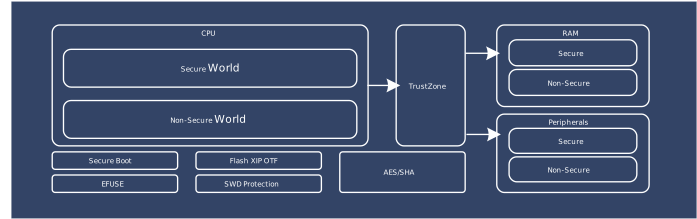
Based on asymmetric encryption and digital signature mechanisms, it verifies public key hashes and firmware signatures. This process can prevent tampering and rollback attacks, ensuring that the device only runs trusted firmware
Supports both embedded and external Flash, with independent key encryption for multiple firmware. When the CPU executes encrypted firmware, it is decrypted in real-time by hardware, with nearly imperceptible performance impact. Supports unique encryption for each device, preventing injection and cloning attacks
Based on the Arm TrustZone® architecture, coupled with a dedicated hardware access control unit, it achieves strong isolation protection for secure memory areas and secure peripherals. Meanwhile, secure firmware is decrypted by the security encryption engine and loaded into the secure RAM area, ensuring protection against leakage and tampering throughout the entire process
After locking the key area, access is limited to the security engine, preventing tampering and unauthorized reading
Strict control over debug interface access through authentication mechanisms. Supports authorized access and permanent closure, eliminating physical debug attacks. Meets security management requirements at different stages of the product lifecycle, effectively enhancing overall security
Wireless Connectivity
| Wi-Fi Features | ||
|---|---|---|
| Features | Support | Comment |
| Frequency | 2.4GHz/5GHz | |
| Wi-Fi 6 | / | |
| Bandwidth | 40MHz | |
| MaximumPHY rate | 150Mbps | HT MCS7 |
| Main Protocols | 802.11 a/b/g/n | |
| Sub-protocols | 802.11 e/i/w/d/k/v/r | |
| Other Key Protocols | WMM/WPA1~3/WPS/802.1X/EAP | |
| UL LDPC | UL Low-Density Parity-Check Code | |
| DL STBC | DL Space-Time Block Coding | |
| Auto Antenna Diversity | ||
| BT Features | ||
| Features | Support | Comment |
| Bluetooth LE | Bluetooth Low Energy | |
| Scatternet | Scatternet concurrent central/peripheral operation | |
| LE 2Mpbs PHY | ||
| SIG Mesh | Certified for SIG Mesh v1.1 | |
| High-Power Mode | 8dBm | |
System Power Consumption
| Mode | Wi-Fi | Power Consumption | Unit | Comment |
|---|---|---|---|---|
| Deep-Sleep | OFF | 10 | µA | |
| Sleep | OFF | 75 | µA | |
| Active | OFF | 20 | mA | |
| WoWLAN | DTIM=3 | 191 | µA | |
| WoWLAN | DTIM=10 | 110 | µA |
NOTICE:
- Test conditions: 3.3V, 25°C
- WoWLAN: System average power consumption
Application Scenarios
- Home appliance control panel
- Smart door lock
- Smart toy
- Smart voice
- Smart remote controller
- Wi-Fi headset
- Wi-Fi gamepad
- BLE gateway
- Smart POS
Home appliance control panel
Smart door lock
Smart toy
Smart voice
Smart remote controller
Wi-Fi headset
Wi-Fi gamepad
BLE gateway
Smart POS
Highlights
Realtek RTL8735B series is a new generation of highly integrated Wi-Fi/Bluetooth/Image ISP eight-in-one single-chip solution, featuring a 10mm x 10mm QFN package. Its low power consumption design significantly extends the system's battery life. The single chip also provides rich I/O interfaces and has successfully assisted customers in designing compact IoT doorbells, portable AI cameras, home appliances with AIoT camera video requirements, applications for edge AI audio-visual recognition, and IoT devices that can be powered by batteries.
Integrates an NPU engine with up to 0.4TOPS computing power, and also integrates an Armv8-M processor, up to 500MHz.
Supports 2K/FHD high-definition video, 1080p@30fps + 720p@30fps, 2K@24fps, and supports millisecond-level fast boot-up to ensure no footage is missed.
Integrates various security features including TrustZone, secure boot, symmetric encryption, asymmetric encryption, TRNG, HUK, OTP storage, Flash XIP decryption, etc., to safeguard the security of customer products
Supporting the 5GHz band to effectively avoid common interference sources (Bluetooth, Zigbee, microwave devices) through spectrum isolation. Leveraging abundant non-overlapping channel resources to significantly reduce co-channel interference risks, delivering high-speed, low-interference stable transmission performance.
Built-in audio codec supports audio input and output, reducing dependency on external components and adaptation costs, facilitating voice interaction and audio playback
Integrates H.264/H.265 video encoding, supports AI model conversion: yolov3/4/7-tiny and CNN Gray/RGB.
System Architecture
- Armv8M architecture
- Up to 500MHz
- 32KB I-Cache
- 32KB D-Cache
- 0.4TOPS@INT8/INT16 (NPU) computing power
- Embedded 64MB/128MB/256MB DDR2/DDR3 memory: 533MHz
- Internal 768KB ROM: 250MHz
- Internal 512KB SRAM: 250MHz
- Supports SPI NOR Flash or NAND Flash
Part Number
| Part number | RTL8735BDM-VA4-CG | RTL8735BM-VA4-CG | RTL8735BDM-VA9-CG |
|---|---|---|---|
| Real-M500 | 500MHz | 500MHz | 500MHz |
| NPU | 0.4TOPS@INT8/INT16 | 0.4TOPS@INT8/INT16 | 0.4TOPS@INT8/INT16 |
| ISP/Video Processor | Up to 2K/FHD | Up to 2K/FHD | Up to 2K/FHD |
| On-chip SRAM | 512KB | 512KB | 512KB |
| TrustZone | |||
| DDR | 128MB (DDR2) | 128MB (DDR2) | 256MB (DDR3) |
| Wi-Fi | Wi-Fi 4 (Dual Band) | Wi-Fi 4 (2.4GHz) | Wi-Fi 4 (Dual Band) |
| Bluetooth | LE | LE | LE |
| Operating voltage | 3.135V ~ 3.465V | 3.135V ~ 3.465V | 3.135V ~ 3.465V |
| Operating temperature | -20°C ~ 85°C | -20°C ~ 85°C | -20°C ~ 85°C |
| Package (mm) | QFN128 (10 x 10) | QFN128 (10 x 10) | QFN128 (10 x 10) |
Video/ISP Features
- Multi-stream real-time H.265/H.264/JPEG encoding
- Supports 5-megapixel (2592x1944) sensor
- 1080p@45fps; 2K@24fps
- Supports 12bit Bayer pattern input and 8bit YUY2 input from CMOS sensor
- Supports MIPI CSI-2 four data lane
- CBR/VBR/CVBR/FIXQP/AVBR rate control, ROI/GDR, rotation/cropping
- Supports Auto Banding, Auto Exposure, Auto White Balance
- Advanced temporal and spatial noise reduction(3DNR)
- Lens shading compensation/ Black level compensation and dead pixel cancellation/ horizontal lens distortion correction/ High dynamic range fusion and tone mapping for HDR sensor input
- Programmable gamma table
- Digital WDR
- Image enhancement(brightness, contrast, saturation, hue and sharpness)
- ISP tool for easy image quality tuning
Peripheral Interfaces
| Function | Quantity |
|---|---|
| GPIO | 59 |
| SPI | 2 |
| UART | 4 |
| I2C | 2 |
| PWM | 12 |
| ADC | 8 |
| GDMA | 12 |
| USB 2.0 | 1 |
| SD Host Controller | 1 |
| Audio DAC | 1 |
| Audio ADC | 1 |
| Digital Microphone | 2 |
Security Features
We consistently prioritize security as the core of our products, offering our customers a rich array of security features through hardware design and providing exceptional hardware-based attack resistance, helping to create IoT products with ultimate security.
| Features | RTL872xD | RTL8721Dx | RTL8721F | RTL8720E | RTL8710E | RTL8726E | RTL8713E | RTL8730E | RTL8735B | Comment |
|---|---|---|---|---|---|---|---|---|---|---|
| Symmetric Encryption Engine | ||||||||||
| Asymmetric Encryption Engine | / | / | ||||||||
| Secure Boot | ||||||||||
| Flash OTF Decryption | ||||||||||
| Arm TrustZone®-M | / | / | ||||||||
| EFUSE Secure Storage | ||||||||||
| True Random Number Generator | / | |||||||||
| HUK Derivation Mechanism | / | |||||||||
| Authenticated Debug Access |
In addition to the essential symmetric encryption engines like AES for IoT, we also provide computationally more intensive asymmetric encryption algorithms such as ECDSA, EdDSA, and RSA. This greatly alleviates the computational burden on the CPU and improves encryption and decryption speeds
Based on asymmetric encryption and digital signature mechanisms, it verifies public key hashes and firmware signatures. This process can prevent tampering and rollback attacks, ensuring that the device only runs trusted firmware
Supports both embedded and external Flash, with independent key encryption for multiple firmware. When the CPU executes encrypted firmware, it is decrypted in real-time by hardware, with nearly imperceptible performance impact. Supports unique encryption for each device, preventing injection and cloning attacks
Based on the Arm TrustZone® architecture, coupled with a dedicated hardware access control unit, it achieves strong isolation protection for secure memory areas and secure peripherals. Meanwhile, secure firmware is decrypted by the security encryption engine and loaded into the secure RAM area, ensuring protection against leakage and tampering throughout the entire process
Physical-level anti-extraction, key area locked for access only by the security engine, tamper-resistant and read-proof. Supports independent secure zones and CRC verification
Generates high-security random numbers based on physical entropy sources. Certified by NIST for randomness. Provides unpredictability to the system, resistant to prediction attacks
Hardware Unique Key (HUK) with physical isolation protection, unreadable and unclonable, used for secure derivation of application keys
Strict control over debug interface access through authentication mechanisms. Supports authorized access and permanent closure, eliminating physical debug attacks. Meets security management requirements at different stages of the product lifecycle, effectively enhancing overall security
Wireless Connectivity
| Wi-Fi Features | ||
|---|---|---|
| Features | Support | Comment |
| Frequency | 2.4GHz/5GHz | |
| Wi-Fi 6 | / | |
| Bandwidth | 20MHz | |
| MaximumPHY rate | 72Mbps | HT MCS7 |
| Main Protocols | 802.11 a/b/g/n | |
| Sub-protocols | 802.11 e/i/w/d/k/v/r | |
| Other Key Protocols | WMM/WPA1~3/WPS/802.1X/EAP | |
| UL LDPC | UL Low-Density Parity-Check Code | |
| DL STBC | DL Space-Time Block Coding | |
| Auto Antenna Diversity | ||
| BT Features | ||
| Features | Support | Comment |
| Bluetooth LE | Bluetooth Low Energy | |
| Scatternet | Scatternet concurrent central/peripheral operation | |
| LE 2Mpbs PHY | ||
| LE Long Range | LE Coded PHY long-range mode (125kbps/500kbps) | |
| LE Advertising Extensions | Support multiple advertising sets | |
Application Scenarios
- IoT doorbell
- Portable AI camera
- Home appliances with AIoT camera
- Edge AI audio-visual recognition demands
- Battery-powered IoT devices