RTL8721Dx-Realtek IoT | Wi-Fi SoC

Ameba IoT wireless solutions, featuring high integration, stable performance, low power consumption, and enhanced security
Highlights
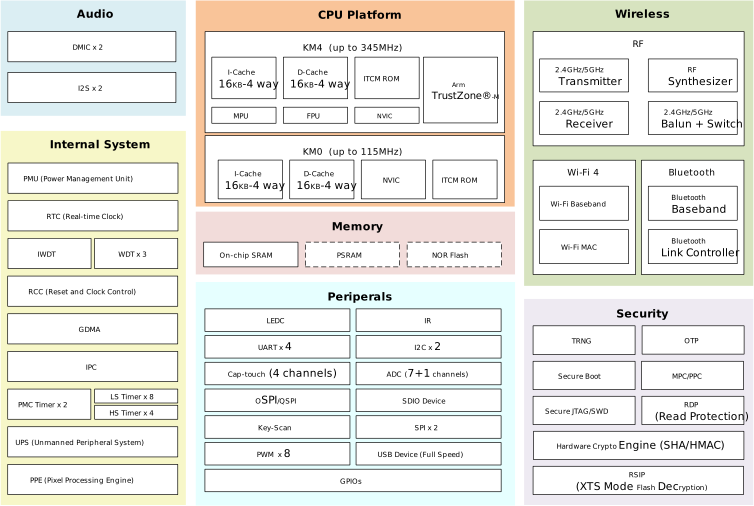
RTL8721Dx is a dual-core IoT SoC integrating Real-M300 core (compatible with Arm Cortex-M55) and Real-M200 core (compatible with Arm Cortex-M23), supporting Wi-Fi 4 dual-band (2.4GHz/5GHz, up to 150Mbps) and Bluetooth LE wireless connectivity. The chip features 512KB embedded SRAM, supports external QSPI NOR Flash (up to 104MHz) and DDR PSRAM (up to 200MHz), and achieves PSA Level 2 security certification through multiple security mechanisms including Arm TrustZone®-M, Secure Boot, AES/SHA hardware encryption engines, OTP secure storage, and true random number generator. RTL8721Dx provides rich peripheral interfaces including USB 2.0 full-speed device, SDIO device, multiple SPI/UART/I2C, dual-channel I2S audio, infrared transceiver, 8×8 keyboard scanner, and LCD display driver, supports Wi-Fi R-MESH multi-hop networking and ultra-low-power WoWLAN mode (13.9µA deep sleep, 84µA average at DTIM=10), suitable for smart home control, wireless audio, battery-powered cameras, smart locks, video intercoms, BLE gateways and various IoT application scenarios., Wi-Fi, BLE, and other important functions, this IC also supports the following features:

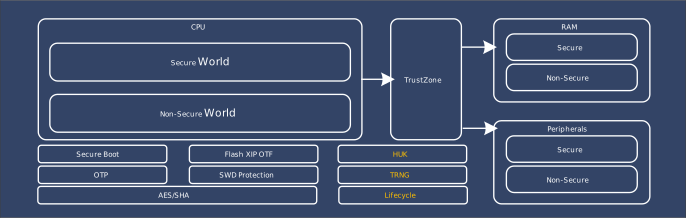
Integrating various security features including Arm TrustZone®, TRNG, HUK, OTP storage, Flash XIP decryption, etc., it provides PSA Level 2 and above security protection for customer's products.

Supporting 5GHz band to effectively avoid common interference sources (Bluetooth, Zigbee, and microwave devices etc.) through spectrum isolation, leveraging abundant non-overlapping channel resources to significantly reduce co-channel interference risks, delivering high-speed, low-interference stable transmission performance

Multi-hop and multi-branch intelligent networking, significantly extending the AP connection range; underlying layer forwarding and control, transparent to application layer development, eliminating traditional Mesh adaptation constraints; rapid fault self-healing, ultra-low latency, and ultra-high stability, comprehensively breaking through traditional Mesh performance bottlenecks

UI rendering hardware accelerator provides smooth and fast interface animations, enhancing the human-machine interaction experience of smart panels. It supports OSPI/QSPI/SPI display interfaces, flexibly adaptable from small LCDs to HD screens.

Supporting ultra-low-power WoWLAN and enabling rapid restoration of the original runtime contexts, it empowers battery-powered devices with network listening wake-up functionality

USB 2.0 Full-Speed Device, SDIO Device
System Architecture

- Armv8.1-M Architecture
- Arm Cortex®-M55 ISA compatible
- Up to 345MHz, 3-stage pipeline
- 16KB I-Cache
- 16KB D-Cache
- FPU/DSP instruction extensions
- Arm TrustZone®-M
- Armv8-M Architecture
- Arm Cortex®-M23 ISA compatible
- Up to 115MHz, 2-stage pipeline
- 16KB I-Cache
- 16KB D-Cache

- 512KB SRAM
- QSPI NOR Flash: Up to 104MHz
- DQ8 DDR PSRAM: Up to 200MHz
Part Number
| Part number | RTL8721DAF-VA2-CG | RTL8721DAF-VT2-CG | RTL8721DAM-VA2-CG | RTL8721DCF-VA2-CG | RTL8721DCM-VA2-CG | RTL8721DCM-VA3-CG | RTL8721DGF-VW2-CG | RTL8721DGM-VW2-CG |
|---|---|---|---|---|---|---|---|---|
| Real-M300 | 345MHz | 345MHz | 345MHz | 345MHz | 345MHz | 345MHz | 345MHz | 345MHz |
| Real-M200 | 115MHz | 115MHz | 115MHz | 115MHz | 115MHz | 115MHz | 115MHz | 115MHz |
| On-chip SRAM | 512KB | 512KB | 512KB | 512KB | 512KB | 512KB | 512KB | 512KB |
| Arm TrustZone | Y | Y | Y | Y | Y | Y | Y | Y |
| NOR Flash | 4MB | 4MB | N | 4MB | N | N | 4MB | N |
| PSRAM | N | N | 4MB | N | 4MB | 8MB | N | 4MB |
| Wi-Fi | Wi-Fi 4 (Dual Band) | Wi-Fi 4 (Dual Band) | Wi-Fi 4 (Dual Band) | Wi-Fi 4 (Dual Band) | Wi-Fi 4 (Dual Band) | Wi-Fi 4 (Dual Band) | Wi-Fi 4 (Dual Band) | Wi-Fi 4 (Dual Band) |
| Bluetooth | LE | LE | LE | LE | LE | LE | LE | LE |
| Operating voltage | 2.97V ~ 3.63V | 2.97V ~ 3.63V | 2.97V ~ 3.63V | 2.97V ~ 3.63V | 2.97V ~ 3.63V | 2.97V ~ 3.63V | 1.71V ~ 3.63V | 1.71V ~ 3.63V |
| Operating temperature | -20°C ~ 85°C | -40°C ~ 105°C | -20°C ~ 85°C | -20°C ~ 85°C | -20°C ~ 85°C | -20°C ~ 85°C | -20°C ~ 85°C | -20°C ~ 85°C |
| Package (mm) | QFN48 (6 x 6) | QFN48 (6 x 6) | QFN48 (6 x 6) | QFN68 (8 x 8) | QFN68 (8 x 8) | QFN68 (8 x 8) | BGA100 (5.1 x 5.1) | BGA100 (5.1 x 5.1) |
Peripheral Interfaces
| FUNCTION | RTL8721DAF | RTL8721DAM | RTL8721DCF | RTL8721DCM | RTL8721DGF | RTL8721DGM |
|---|---|---|---|---|---|---|
| GPIO | 21 | 14 | 40 | 33 | 54 | 42 |
| SPI | 2 | 2 | 2 | 2 | 2 | 2 |
| UART | 4 | 4 | 4 | 4 | 4 | 4 |
| I2C | 2 | 2 | 2 | 2 | 2 | 2 |
| OSPI/QSPI | 1 | 1 | 1 | 1 | 1 | 1 |
| I2S | 2 | 2 | 2 | 2 | 2 | 2 |
| Digital microphone | 2 | 2 | 2 | 2 | 2 | 2 |
| ADC and Cap-touch | 3 | 3 | 7 | 7 | 7 | 7 |
| Infrared Transeiver | 1 | 1 | 1 | 1 | 1 | 1 |
| Key-Scan | 8 x 8 | N x (14-N) | 8 x 8 | 8 x 8 | 8 x 8 | 8 x 8 |
| SWD Interface | 1 | 1 | 1 | 1 | 1 | 1 |
| General Timer | 10 | 10 | 10 | 10 | 10 | 10 |
| Capture Timer | 1 | 1 | 1 | 1 | 1 | 1 |
| RTC | 1 | 1 | 1 | 1 | 1 | 1 |
| NeoPixel LED | 1 | 1 | 1 | 1 | 1 | 1 |
| PWM | 8 | 8 | 8 | 8 | 8 | 8 |
| USB | 1 | 1 | 1 | 1 | 1 | 1 |
| SDIO_DEVICE | 1 | 1 | 1 | 1 | 1 | 1 |
| IWDG | 1 | 1 | 1 | 1 | 1 | 1 |
| System WDG | 3 | 3 | 3 | 3 | 3 | 3 |
| GDMA | 8 | 8 | 8 | 8 | 8 | 8 |
Security Features
We consistently prioritize security as the core of our products, offering our customers a rich array of security features through hardware design and providing exceptional hardware-based attack resistance, helping to create IoT products with ultimate security.
| Features | Filter | RTL8720F | RTL8721F | RTL8721Dx | RTL8720E | RTL8710E | RTL8726E | RTL8713E | RTL8730E | RTL872xD | RTL8735B |
|---|---|---|---|---|---|---|---|---|---|---|---|
| AES Hardware Engine | Y | Y | Y | Y | Y | Y | Y | Y | Y | Y | |
| SHA Hardware Engine | Y | Y | Y | Y | Y | Y | Y | Y | Y | Y | |
| ECDSA/ECDH Hardware Engine | Y | Y | N | Y | Y | Y | Y | Y | N | Y | |
| EDDSA Hardware Engine | Y | Y | N | N | N | N | N | Y | N | Y | |
| RSA Hardware Engine | Y | Y | N | N | N | N | N | Y | N | Y | |
| Secure Boot | Y | Y | Y | Y | Y | Y | Y | Y | Y | Y | |
| Flash OTF Decryption | Y | Y | Y | Y | Y | Y | Y | Y | Y | Y | |
| Arm TrustZone | Y | Y | Y | Y | N | Y | N | Y | Y | Y | |
| OTP Secure Storage | Y | Y | Y | Y | Y | Y | Y | Y | Y | Y | |
| True Random Number Generator | Y | Y | Y | Y | Y | Y | Y | Y | N | Y | |
| HUK Derivation Mechanism | Y | Y | Y | Y | Y | Y | Y | Y | N | Y | |
| Authenticated Debug Access | Y | Y | Y | Y | Y | Y | Y | Y | Y | Y |
Provide a laboratory evaluation of the PSA Root of Trust (PSA-RoT) to demonstrate its resilience against scalable software attacks.
Based on asymmetric encryption and digital signature mechanisms, it verifies public key hashes and firmware signatures. This process can prevent tampering and rollback attacks, ensuring that the device only runs trusted firmware
Supports both embedded and external Flash, with independent key encryption for multiple firmware. When the CPU executes encrypted firmware, it is decrypted in real-time by hardware, with nearly imperceptible performance impact. Supports unique encryption for each device, preventing injection and cloning attacks
Based on the Arm TrustZone® architecture, coupled with a dedicated hardware access control unit, it achieves strong isolation protection for secure memory areas and secure peripherals. Meanwhile, secure firmware is decrypted by the security encryption engine and loaded into the secure RAM area, ensuring protection against leakage and tampering throughout the entire process
Physical-level anti-extraction, key area locked for access only by the security engine, tamper-resistant and read-proof. Supports independent secure zones and CRC verification
Generates high-security random numbers based on physical entropy sources. Certified by NIST for randomness. Provides unpredictability to the system, resistant to prediction attacks
Hardware Unique Key (HUK) with physical isolation protection, unreadable and unclonable, used for secure derivation of application keys
Strict control over debug interface access through authentication mechanisms. Supports authorized access and permanent closure, eliminating physical debug attacks. Meets security management requirements at different stages of the product lifecycle, effectively enhancing overall security
Security Certifications Support
We offer support for multiple security certifications. By providing these advanced security features and certification support, we aim to assist our customers in efficiently meeting various market entry requirements, ensuring the security and competitiveness of their products. Most of our chips are capable of achieving PSA Certified Level 2 and Level 3, with some chips already having completed PSA Certified Level 2 certification.
Wireless Connectivity
Wi-Fi Feature List
| Features | Filter | RTL8720F | RTL8721F | RTL8721Dx | RTL8720E | RTL8710E | RTL8726E | RTL8713E | RTL8730E | RTL872xD | RTL8735B |
|---|---|---|---|---|---|---|---|---|---|---|---|
| Frequency | 2.4GHz | 2.4GHz/5GHz | 2.4GHz/5GHz | 2.4GHz | 2.4GHz | 2.4GHz | 2.4GHz | 2.4GHz/5GHz | 2.4GHz/5GHz | 2.4GHz/5GHz | |
| Bandwidth | 20MHz | 20MHz | 40MHz | 20MHz | 20MHz | 20MHz | 20MHz | 20MHz | 40MHz | 20MHz | |
| Maximum PHY rate | 114.7Mbps | 114.7Mbps | 150Mbps | 114.7Mbps | 114.7Mbps | 114.7Mbps | 114.7Mbps | 114.7Mbps | 150Mbps | 72Mbps | |
| 802.11a | N | Y | Y | N | N | N | N | Y | Y | Y | |
| 802.11ax (Wi-Fi6) | Y | Y | N | Y | Y | Y | Y | Y | N | N | |
| 802.11b/g/n | Y | Y | Y | Y | Y | Y | Y | Y | Y | Y | |
| 802.11e/i/w/d/k/v/r | Y | Y | Y | Y | Y | Y | Y | Y | Y | Y | |
| WMM/WPA1~3/WPS/ 802.1X/EAP |
Y | Y | Y | Y | Y | Y | Y | Y | Y | Y | |
| UL LDPC | Y | Y | Y | Y | Y | Y | Y | Y | Y | Y | |
| DL STBC | Y | Y | Y | Y | Y | Y | Y | Y | Y | Y | |
| Auto Antenna Diversity | Y | Y | Y | Y | Y | Y | Y | Y | Y | Y | |
| CSI | Y | Y | Y | Y | Y | Y | Y | Y | N | N | |
| MCC | Y | Y | Y | Y | Y | Y | Y | Y | N | N | |
| R-MESH | Y | Y | Y | N | N | N | N | N | N | N | |
| Wi-Fi Card Mode | Y | Y | Y | Y | Y | Y | Y | N | N | N | |
| P2P/NAN | Y | Y | Y | Y | Y | Y | Y | Y | N | N | |
| TWT | Y | Y | Y | Y | Y | Y | Y | Y | N | N |
Bluetooth Feature List
| Features | Filter | RTL8720F | RTL8721F | RTL8721Dx | RTL8720E | RTL8710E | RTL8726E | RTL8713E | RTL8730E | RTL872xD | RTL8735B |
|---|---|---|---|---|---|---|---|---|---|---|---|
| Bluetooth Mode | Bluetooth LE | Bluetooth LE | Bluetooth LE | Bluetooth LE | Bluetooth LE | Bluetooth Dual Mode | Bluetooth Dual Mode | Bluetooth Dual Mode | Bluetooth LE | Bluetooth LE | |
| Bluetooth BR/EDR | N | N | N | N | N | Y | Y | Y | N | N | |
| LE Audio | N | N | N | N | N | N | N | Y | N | N | |
|
Dedicated antenna for Bluetooth |
N | N | N | N | N | N | N | Y | N | N | |
| Scatternet | Y | Y | Y | Y | Y | Y | Y | Y | Y | Y | |
| LE 2Mpbs PHY | Y | Y | Y | Y | Y | Y | Y | Y | Y | Y | |
| LE Long Range | Y | Y | Y | Y | Y | Y | Y | Y | N | Y | |
|
LE Advertising Extensions |
Y | Y | Y | Y | Y | Y | Y | Y | N | Y | |
| Periodic Advertising | N | N | N | Y | Y | Y | Y | Y | N | N | |
| Periodic Advertising Sync Transfer |
N | N | N | Y | Y | Y | Y | Y | N | N | |
|
Direction Finding (AoA/AoD) |
N | N | N | Y | Y | Y | Y | Y | N | N | |
|
LE Isochronous Channels (CIS/BIS) |
N | N | N | N | N | N | N | Y | N | N | |
| LE Power Control | N | N | N | Y | Y | Y | Y | Y | N | N | |
| SIG Mesh | Y | Y | Y | Y | Y | Y | Y | Y | Y | N | |
| High-Power Mode | Y | Y | TBD | N | N | N | N | N | N | N |
Power Consumption
| Mode | Wi-Fi | Power Consumption | Unit | Comment |
|---|---|---|---|---|
| Deep-Sleep | OFF | 13.9 | µA | Flash package |
| Sleep | OFF | 37.7 | µA | Flash package |
| Active | OFF | 6.56 | mA | 0.9V WFI mode, CPU=240MHz |
| WoWLAN | DTIM=3 | 165 | µA | 2.4G mode |
| WoWLAN | DTIM=10 | 84 | µA | 2.4G mode |
Note:
- Test conditions: 3.3V, 25°C
- WoWLAN: System average power consumption
Application Scenarios
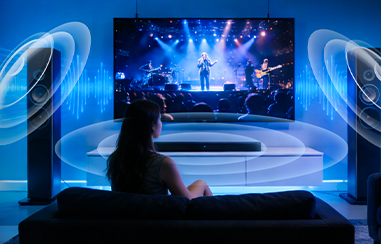
Ameba IC leverages 5GHz high-bandwidth Wi-Fi transmission capability and deeply optimized protocol stack to achieve lossless transmission, ultra-low latency and precise synchronization of multi-channel audio. It perfectly delivers the immersive sound field effect of Dolby Atmos, creating a cinema-level auditory experience for wireless home theaters. Integrated with an AES-256 hardware encryption engine and secure boot mechanism, it comprehensively protects audio transmission privacy and device firmware security. Equipped with rich peripheral interfaces and one-stop software and hardware development kits, it supports in-depth product customization, enabling rapid implementation of products such as wireless soundbars and home audio systems without complex adaptation.

Ameba IC serves as a wireless network card connected to Host MCUs, providing network access capability. Supports multiple physical interfaces (UART, SPI, SDIO, USB) and major development platforms (Linux, FreeRTOS, Zephyr). Compared to traditional SoftMAC architecture, Ameba Wi-Fi Card mode implements the complete IEEE 802.11 MAC layer in-device, eliminating complex Wi-Fi protocol handling on the Host—resulting in lighter drivers, lower resource consumption, and easier porting. The device-side TCP/IP keep-alive mechanism and low-power design ensure fast wake-up response while reducing overall power consumption. Ideal for smart home appliances, industrial sensors, and embedded system network expansion.
Ameba IC empowers Mesh network architecture to significantly expand Wi-Fi coverage and eliminate signal dead zones. Unlike traditional Mesh that requires enabling SoftAP and TCP/IP stack forwarding on relay nodes, R-Mesh implements data forwarding directly at the Wi-Fi MAC layer, reducing memory and computing resource consumption. It features no routing table maintenance, proactive loop avoidance, and sub-millisecond parent switching—all transparent to the application layer. Includes open-source multi-terminal R-Mesh visualization simulation tools for more convenient and intuitive visual testing. With RPP zero-provisioning protocol, it is suitable for rapid deployment of large-scale nodes. Widely used in smart lighting, smart agriculture, PV micro-inverters, and other scenarios.

Ameba IC leverages Wi-Fi 6 high-efficiency wireless connectivity, low-power design, and local edge processing capability to support stable operation of Wi-Fi battery cameras in low-power standby, event-triggered wake-up, fast image/video upload, and remote viewing scenarios. Wi-Fi 6 provides higher transmission efficiency, better multi-device concurrency, and stable connectivity. Together with WoWLAN, TWT, and flexible multi-source wake-up mechanisms, it helps extend battery life. Combined with local AI/ML inference, a pixel processing engine, and rich peripheral interfaces, it enables human detection, abnormal event recognition, image quality enhancement, infrared night vision, alarm reporting, and cloud collaboration. Secure boot, wireless transmission encryption, and end-to-end network encryption provide chip-to-cloud privacy protection, making it suitable for smart doorbells, outdoor cameras, and low-power security cameras.
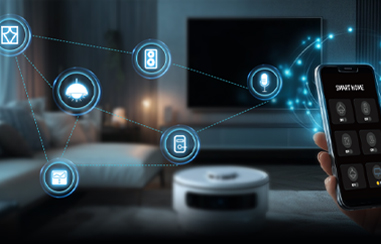
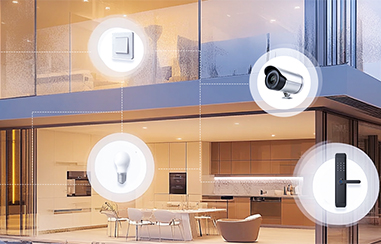
Ameba IC leverages Wi-Fi and BLE dual-mode capabilities to build a smart home network hub, enabling cross-protocol interconnection between Bluetooth and Wi-Fi devices. It supports multi-node BLE Mesh and Matter protocol for large-scale device networking. Based on Arm® security architecture and PSA certification, it ensures encrypted transmission of device control commands and private data. The ultra-low power design meets 24-hour standby requirements, while rich peripherals can directly drive sensors, lighting modules, and actuators. Voice control, scenario linkage, and remote management create an efficient and convenient whole-house smart ecosystem.
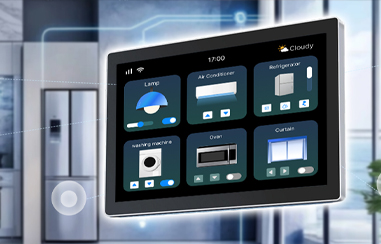
Ameba IC integrates three core capabilities: local scenario control, multi-modal human-machine interaction, and wired-wireless convergence, enabling intelligent upgrades for wall-mounted switches. It supports multi-channel PWM dimming interfaces, a touch-sensing engine, a programmable LED controller, and industrial-grade expansion interfaces, allowing precise driving of various execution units and enabling human-machine interaction. The chip integrates Wi-Fi and Bluetooth for multi-mode networking, and its hardware infrared engine supports mainstream protocols. With chip-level power management, it maintains wireless connectivity in standby mode with ultra-low power consumption, meeting the demands of high-reliability, low-latency wall-mounted control scenarios.
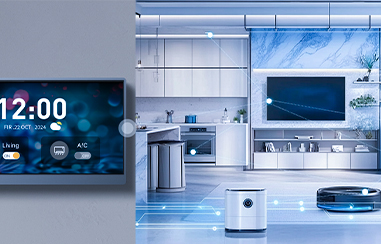
Ameba IC leverages BLE and dual-band Wi-Fi dual-mode capabilities to enable protocol conversion and relay transmission between Bluetooth terminal data and the cloud. With BLE long-range communication features, combined with high transmit power and excellent receive sensitivity, it supports multi-node BLE Mesh networking and is compatible with multi-master/slave scatternet architecture. This effectively expands the gateway coverage, facilitates Bluetooth device access in scenarios such as smart homes and buildings, and achieves efficient interconnection of large-scale nodes. Meanwhile, the PSA Level 2 security mechanism ensures data transmission privacy.

Ameba IC is PSA Level 2 certified, with the built-in hardware encryption engine and Flash XIP real-time decryption function, providing chip-level security protection for firmware and payment transaction data. It integrates BLE and Wi-Fi wireless communication functionality, and is equipped with rich interfaces such as SPI, USB, and SDIO, perfectly adapting to diverse mobile payment scenarios. The high-performance Arm Cortex®-M core ensures real-time and efficient transaction data processing and peripheral interaction, fully meeting the stringent performance requirements of commercial payment collection.
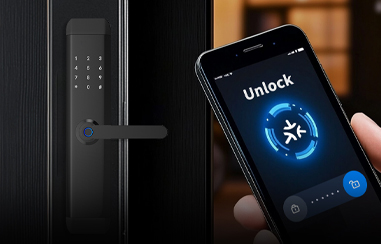
Ameba IC integrates Arm® security architecture, hardware encryption engine (AES/SHA), secure boot, and OTP secure storage, enabling chip-level encrypted storage and verification of fingerprint, password, and Bluetooth unlocking data. Based on BLE secure connection protocol, it achieves encrypted linkage with mobile phones. Ultra-low power design with WoWLAN network wake-up function is suitable for battery-powered door lock scenarios, ensuring instant unlocking. Rich peripherals can directly drive touch buttons, capacitance detection, and infrared sensing modules, meeting 24/7 standby stable operation and remote control requirements for smart door locks.

Ameba IC integrates capabilities of voice control, infrared learning, wireless remote control and tactile interaction, providing a core solution for next-generation smart remotes and interactive devices. Equipped with a high-performance Audio Codec and I2S interface, it supports dual digital microphone arrays and cooperates with a dual-core processor to achieve low-latency, high-accuracy local voice wake-up and command recognition. A built-in hardware IR transceiver is compatible with mainstream global consumer electronics infrared protocols, breaking the control barrier between new and old devices. It also supports Wi-Fi and BLE dual-mode communication, flexibly connecting smart home devices, realizing seamless switching between Bluetooth voice control and Wi-Fi cloud control, and easily integrating into the whole-house smart ecosystem.
Development Resources
Software Resources
| Icon | Resource Name | Link |
|---|---|---|
 |
FreeRTOS SDK Download | Link |
 |
FreeRTOS SDK Guide | Link |
 |
Development Tools | Link |
|
VS Code Extension | Link |
Hardware Resources
| Icon | Resource Name | Link |
|---|---|---|
|
Datasheet | Link |
|
Pin Multiplexing | Link |
|
Pin Assignment Tool | Link |
 |
EVB User Guide | Link |
EVB Purchase
 |
Modules & EVBs | Link |